Registered NDIS provider · Reg ID 4-JCLD6XENurse-led complex & clinical careServicing Sydney & PerthEnquiries answered same business dayRegistered NDIS provider · Reg ID 4-JCLD6XENurse-led complex & clinical careServicing Sydney & PerthEnquiries answered same business day
Disability Services in South West Sydney, Close to Our Campbelltown Base
The part of Sydney we know best, because we work from the middle of it.
Abundance Healthcare Group's office is in Campbelltown, at the southern end of South West Sydney. Liverpool, Fairfield and Bankstown are the next council areas to the north. That closeness shapes everything on this page: how rosters are staffed, how nurses reach a home and how soon support can begin.
What it is
Complex care across South West Sydney
We provide complex care in South West Sydney for NDIS participants whose support includes clinical tasks: tube feeding, bowel and catheter care, wound care and medication that needs a nurse. Plans are written by registered nurses, and the office that organises the care is inside the region.
Anyone weighing up an NDIS provider in South West Sydney can ask a simple question: where are you based? For us the answer is Chamberlain Street, Campbelltown. For the kind of participant we support, see our page on complex and high intensity care.
What we deliver
Our supports in the south west
Four supports are delivered across the south west: high intensity daily personal activities, community nursing at home, daily personal care, and community access and transport. Because nurses and workers do not have far to travel, combining nursing visits and daily shifts on one roster is simpler here than elsewhere.
High intensity daily personal activities
Daily clinical routines such as PEG feeds, bowel care and catheter care, carried out by workers the nurse has trained and signed off on that person's plan.
Community nursing at home
Registered nurse visits for wounds, catheter changes, medication and plan reviews. Short travel means the nurse can return sooner when something changes.
Daily personal care
Showering, dressing, transfers, meals and continence care, timed around the household. Many homes here hold three generations, and the routine has to work for all of them.
Community access and transport
Appointments, shopping centres, places of worship, sport and family gatherings, with a worker who knows the area and its traffic.
Visits across the south west start from our Campbelltown office.
Local support
One health district, five public hospitals
The whole region falls within the South Western Sydney health district. Five of its public hospitals serve the areas we cover, so discharge planning follows one set of processes wherever the participant has been treated. The table shows where each hospital is.
Hospital
Suburb
Council
Liverpool Hospital
Liverpool
Liverpool City
Bankstown-Lidcombe Hospital
Bankstown
Canterbury-Bankstown
Fairfield Hospital
Prairiewood
Fairfield City
Campbelltown Hospital
Campbelltown
Campbelltown City
Camden Hospital
Camden
Camden
The district's sixth hospital, at Bowral, is in the Southern Highlands and outside our area. The hospitals are listed for geography only. We take referrals from discharge planners at each of them and have no formal arrangement with the district.
Who delivers it
One of Sydney's most multilingual regions: matching workers
Most households in parts of the south west speak a language other than English at home, with Arabic, Vietnamese, Assyrian and Cantonese among the most common. We ask every family which language and customs matter to them, and we match a trained worker where one is available.
Matching is offered honestly. We do not publish a list of languages, because the team changes and a list would soon be wrong. If we cannot match, we tell you, and for care planning we use a professional interpreter so that consent is properly informed.
Funding
Plan budgets and agreements
Our supports are claimed from the participant's plan within the NDIA's pricing schedule. Personal care and high intensity support come from Core Supports, and nursing is funded as a disability-related health support. The service agreement lists every item before the first shift.
For people using the NDIS in South West Sydney, short distances help the budget as well as the roster, because there is little or no provider travel to charge. Plans managed by the NDIA, by a plan manager or by the participant are all accepted.
Timing
Close to our base: what it means for start dates
Rosters are usually easier to fill in the south west than anywhere else we work, for a plain reason: nurses and workers have less distance to cover. That does not make a start date automatic. Clinical training still has to be completed before a worker carries out a task alone.
Referral or enquiry. Professionals refer a participant with the clinical paperwork, while relatives can start with a short description.
Answer on capacity. We reply within one business day.
Nurse assessment. Usually at home, or before discharge if the person is in hospital.
First shifts. Once every worker on the roster is signed off on each clinical task, the service begins.
Safeguards
Checks, incidents and reviews
Every worker holds an NDIS Worker Screening clearance and is signed off on each participant's plan. Incidents are written up and reviewed, and those the law defines as reportable are notified to the NDIS Commission. Plans are reviewed on a schedule and after every hospital admission.
Abundance Healthcare Group is a registered NDIS provider, Registration ID 4-JCLD6XE. The coordinator receives a written update after each review, and a complaint can be made to us or to the Commission at any time.
Local support
Recent support in South West Sydney
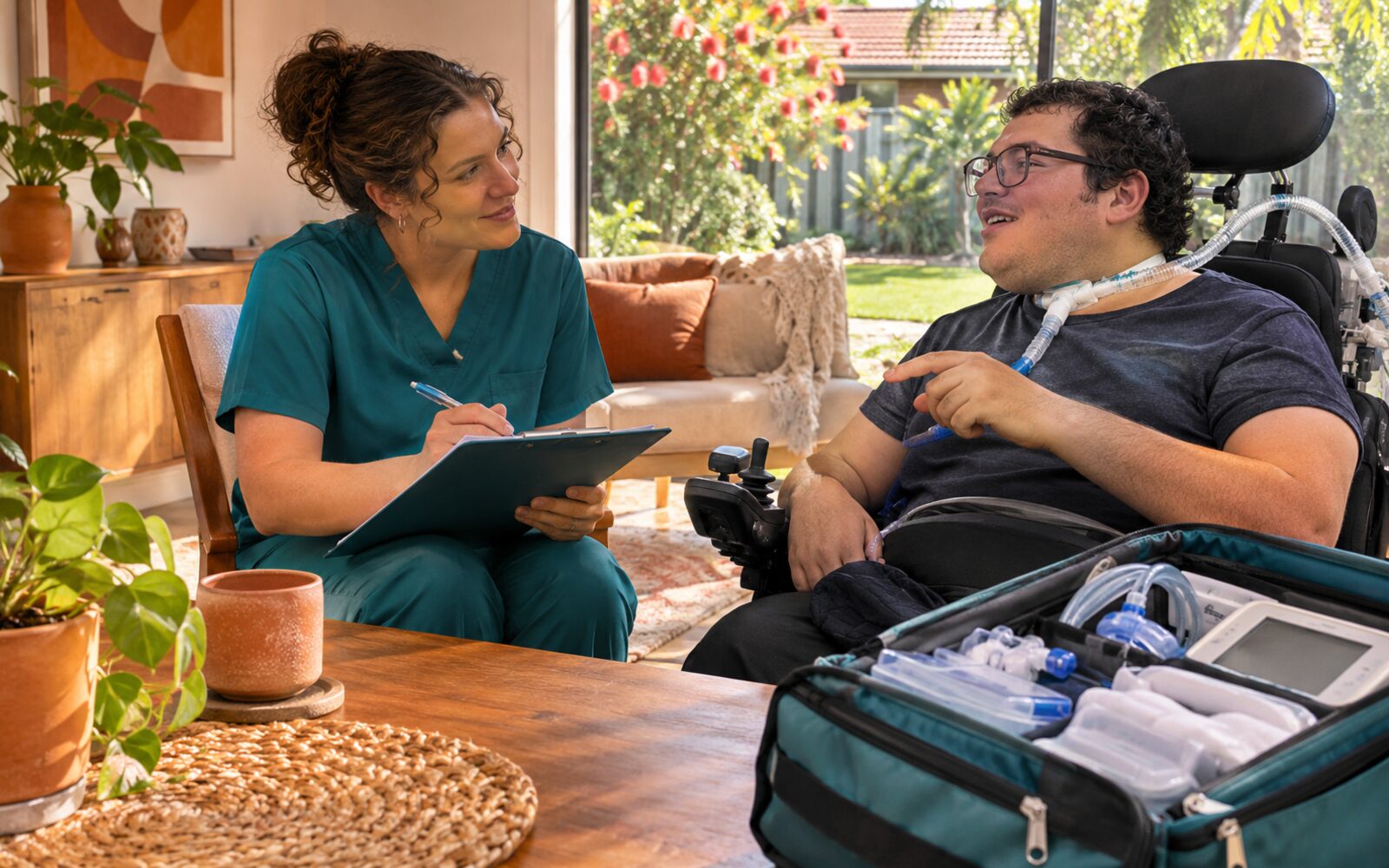
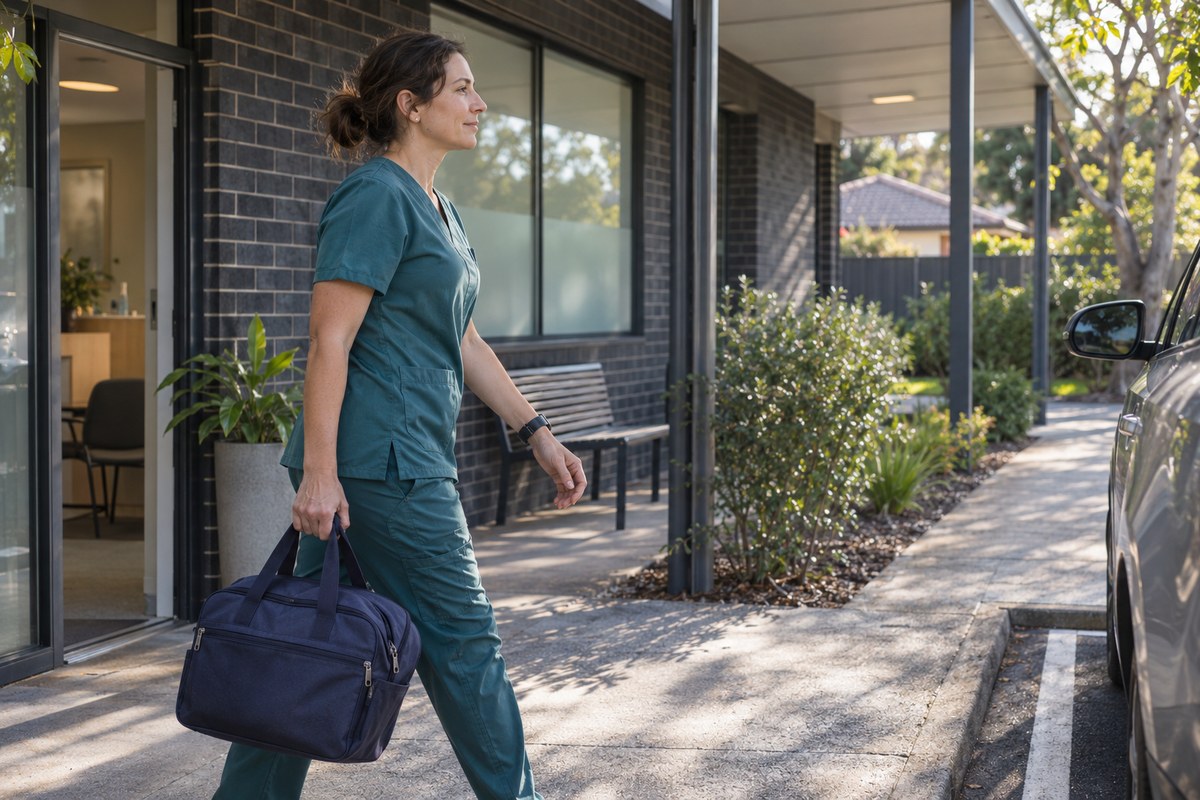
A few scenes from homes we visit across the south west. Participants choose whether a photo is used and sign to say so, and we crop out anything that could identify them or their address.
Where we work
Councils we cover in the south west
We cover three council areas in the south west, Liverpool, Canterbury-Bankstown and Fairfield, together with the Macarthur councils to their south. Each has its own page with the suburbs, the local hospital and the questions people there ask most.
Which councils make up your South West Sydney area?
Liverpool, Canterbury-Bankstown and Fairfield. Campbelltown, Camden and Wollondilly are covered too, and we group those three as the Macarthur region, with a page of their own.
Why are start times shorter here?
They are not guaranteed to be, but rosters are usually easier to fill close to our Campbelltown office because workers and nurses travel less. Clinical training still has to happen first, whatever the suburb.
Can you match a worker by language?
Often, but not always. Tell us the language and any customs that matter. We look for a trained worker who fits and tell you plainly if we cannot find one. Interpreters are used for care planning where needed.
Which hospitals do you take discharge referrals from?
Any hospital, as long as the participant is going home to an address we cover. In this region that usually means Liverpool, Bankstown-Lidcombe, Fairfield, Campbelltown or Camden.
Do nurses visit daily if needed?
Yes, where the clinical need and the plan funding support it. A wound needing daily dressings is a common example. Daily nursing is simplest to arrange in the south west because of the short travel.
Do you cover Camden and Wollondilly?
Yes, as part of the Macarthur region. Camden suburbs are an easy drive from our office. Wollondilly towns such as Picton are further out and are confirmed case by case.
Need complex care in South West Sydney?
Tell us where the person lives and what the care involves. Our Campbelltown team replies within one business day.