Registered NDIS provider · Reg ID 4-JCLD6XENurse-led complex & clinical careServicing Sydney & PerthEnquiries answered same business dayRegistered NDIS provider · Reg ID 4-JCLD6XENurse-led complex & clinical careServicing Sydney & PerthEnquiries answered same business day
Structure, patience and the same faces, so the gains made in rehabilitation carry on at home.
Acquired brain injury NDIS support helps a person rebuild daily life after rehabilitation ends. Abundance Healthcare Group provides it in Sydney and Perth with consistent workers who follow the therapy team's plan, because routine is what turns hospital progress into independence at home.
What it is
NDIS support for acquired brain injury
NDIS support for acquired brain injury covers help with daily routine, personal care, getting out into the community and following the strategies set by therapists. An acquired brain injury, often shortened to ABI, is any damage to the brain after birth, including from trauma, stroke, lack of oxygen or infection.
The NDIS funds this support for people who acquire the injury before 65 and meet the access requirements. When coordinators talk about ABI, NDIS plans usually combine support workers with therapy, and the two only work if they follow the same approach.
What we deliver
What support looks like day to day
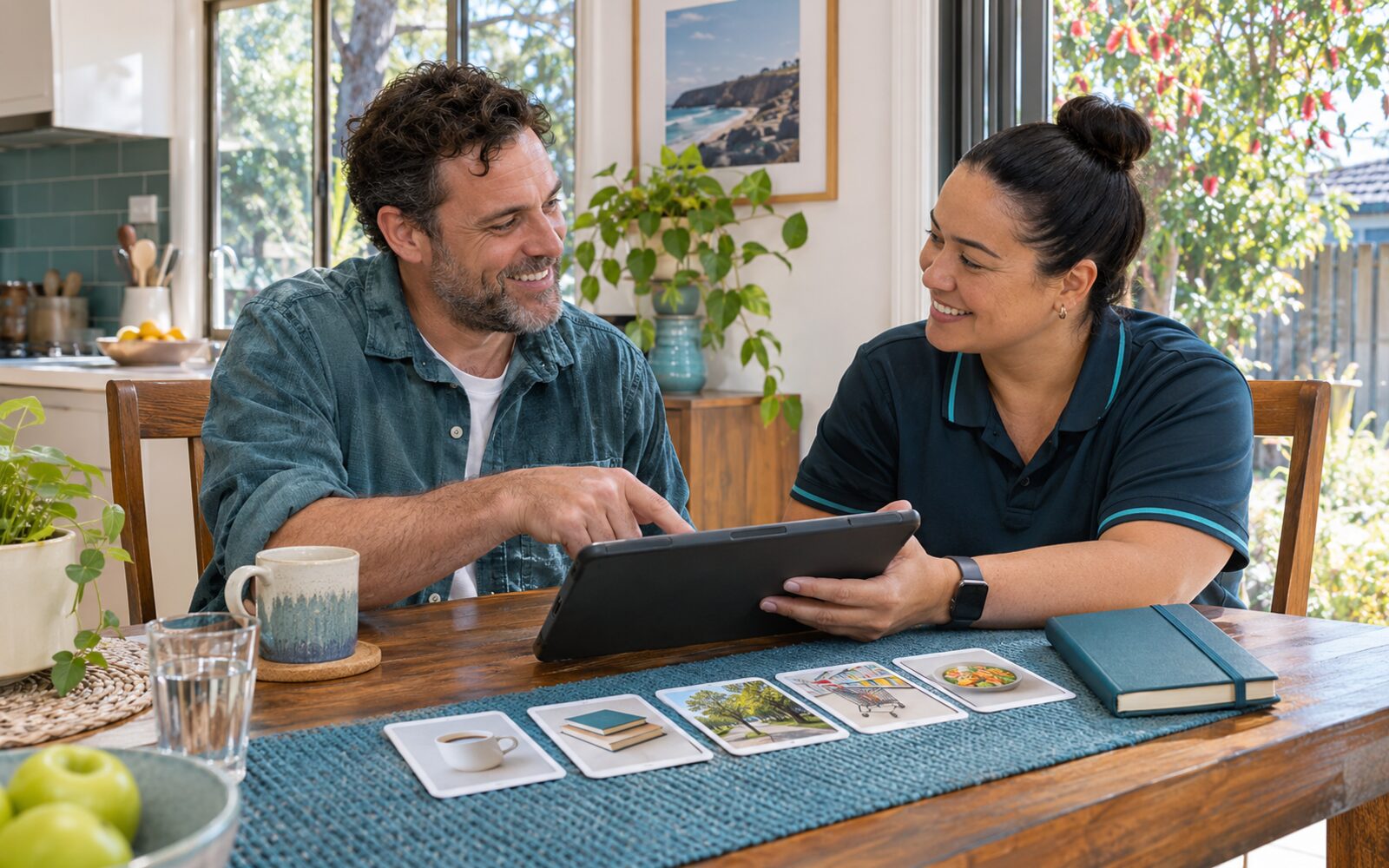
Day to day, support means a predictable routine, the right amount of prompting, and help with the tasks the injury has made hard. Workers aim to do things with the person, not for them, so skills are practised every day.
Routine and prompting
A written daily plan, visual schedules and reminders at the points the person tends to get stuck. Workers prompt in the way the occupational therapist or psychologist has recommended, then step back.
Fatigue and memory strategies
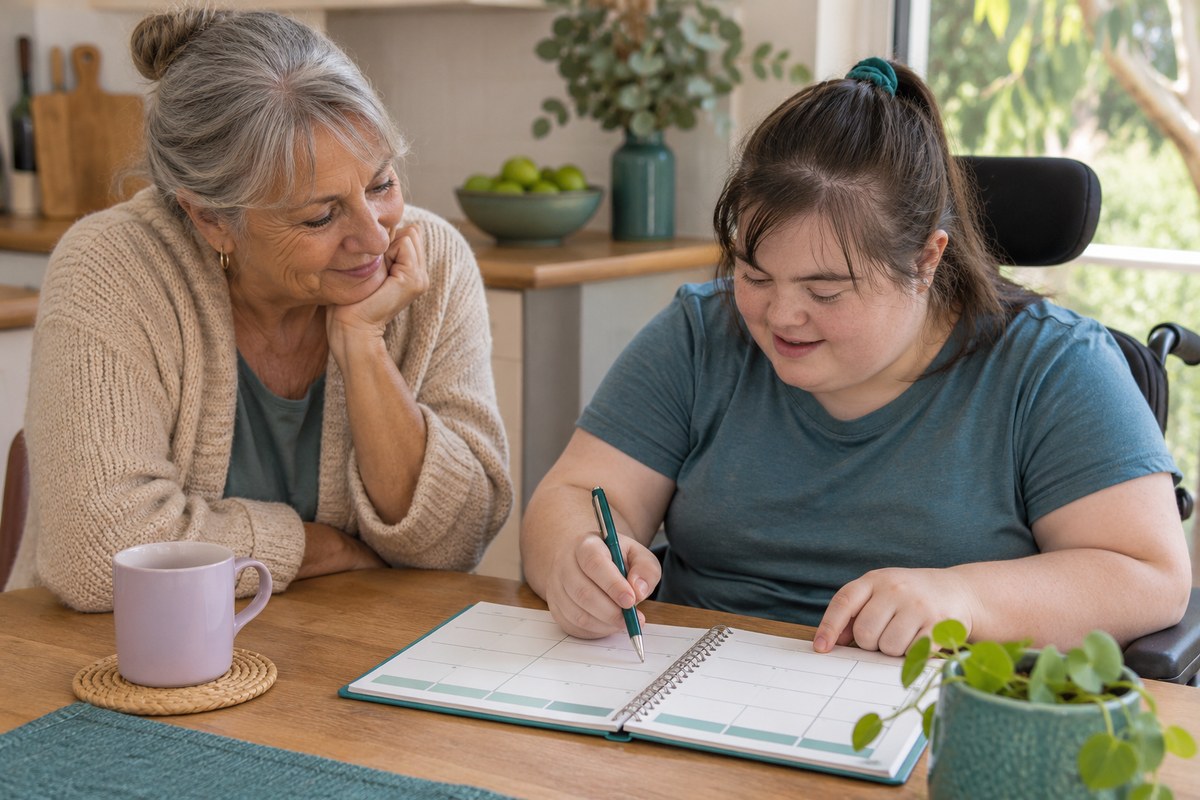
Rest breaks before fatigue builds, one task at a time, and memory aids such as diaries, phone alarms and labelled cupboards. Workers keep these consistent so the person does not have to relearn a system with each new face.
Personal care and community access
Help with showering, dressing and meals where needed, and support to get to appointments, shops and social activities again.
A written routine means the person is not relearning the day with each worker.
What it is
Support needs after ABI: a quick guide
Brain injury affects people differently, so support starts from the effect, not the cause. This guide matches the common effects of ABI to the support that helps and who provides it. Most people will recognise two or three rows.
Effect of ABI
What support helps
Who provides it
Memory and planning difficulty
Written routines, prompts, memory aids used the same way each day
Support worker, guided by the therapist
Fatigue
Paced days, rest breaks, shorter outings
Support worker
Physical changes
Help with showering, dressing, transfers and mobility
Support worker
Swallowing or continence changes
Mealtime plans, continence routines
Trained support worker, with a nurse's plan
Changes in mood or behaviour
A calm, consistent approach that follows the behaviour support plan
Recovery after brain injury depends on repetition, so the same workers using the same strategies matter more than almost anything else. We keep the team small and make sure each worker has read the therapy recommendations before their first shift.
When a therapist changes a strategy, we update the written routine and brief every worker, so the person is not getting three versions of the same instruction.
Funding
Funding for brain injury support
Brain injury support is funded mostly from the NDIS Core Supports budget, with therapy funded from Capacity Building. We charge within the NDIA's current price limits and list every support in the service agreement.
If the injury happened in a motor accident or at work, a compensation or lifetime care scheme may fund supports instead of the NDIS. Tell us which scheme applies and we will explain how we work with it.
Timing
After rehabilitation: how soon support starts
We reply on capacity within one business day. If the discharge date from rehabilitation is known, we use the time before it to meet the person, read the therapy plan and brief the workers, so support starts on the first day home.
In south west Sydney, many people come home from the brain injury rehabilitation unit at Liverpool Hospital, and we take referrals from across the Liverpool area. The hospital is named for geography only.
How it works
Working with the rehabilitation team
The rehabilitation team sets the goals and strategies. We turn them into a daily routine, report what we see and raise it when something is not working. Workers do not change a strategy on their own.
Handover. We ask for the discharge report and therapy recommendations.
Meet and plan. A coordinator, and a nurse where health needs exist, meets the person and family.
Brief the team. Each worker reads the routine and strategies before starting.
Feed back. We send observations to the therapists and coordinator at agreed intervals.
Safeguards
Behaviour changes and safety
Changes in behaviour after brain injury, such as impulsiveness, frustration or poor judgement of risk, are part of the injury. Workers respond calmly and consistently and follow the behaviour support plan where one exists. We do not write behaviour support plans.
A restrictive practice is used only if it is written into a current, authorised behaviour support plan. If the person or others are at risk, workers follow the plan's steps and call triple zero in an emergency. Some people need longer term help with mood and motivation, and our psychosocial support page explains how we approach that.
Reviews
Tracking progress
We track progress against the person's own goals: what they now do alone, what still needs prompting and what has become harder. Those notes go to the therapists and the coordinator, and they are useful evidence at plan reassessment.
Skills are practised in real settings, with the worker stepping back as confidence grows.
Where we work
ABI support locations
We provide brain injury support across Greater Sydney and the Perth metropolitan area, in the person's home and community. A traumatic injury can damage the spine as well as the brain, and we also support people with spinal cord injury.
Common questions
Acquired brain injury questions
Is acquired brain injury covered by the NDIS?
Yes, for people who acquire the injury before 65 and meet the access requirements. The NDIS funds support workers, therapy, equipment and other supports related to the disability. Injuries covered by a compensation scheme may be funded through that scheme.
Is a stroke an acquired brain injury?
Yes. A stroke damages the brain by interrupting its blood supply, so it is one cause of acquired brain injury. Other causes include trauma, lack of oxygen, infection, tumours and alcohol or drug use.
Can you support behaviours of concern?
We can support people whose behaviour has changed after injury, working to a behaviour support plan written by a registered practitioner. We do not write those plans ourselves, and we review each referral to make sure we can keep everyone safe.
Will the same workers attend?
That is what we aim for. We build a small team so strategies are applied consistently. When someone is away, the replacement is a worker who has read the routine and the therapy recommendations.
Do you follow the plan from our therapists?
Yes. Workers follow the strategies your occupational therapist, speech pathologist, physiotherapist or psychologist has set, and we update the written routine whenever a therapist changes them.
Can support start straight after rehab?
Yes, if we know the date. Tell us as early as possible and we will meet the person, read the therapy plan and brief workers before discharge, so support begins the day they come home.
Families looking for acquired brain injury support services often contact several providers at once. If you would like to talk it through, contact us.
Supporting someone after a brain injury?
Tell us what a good day looks like, what is hard and what the therapists have recommended. We reply within one business day.