Registered NDIS provider · Reg ID 4-JCLD6XENurse-led complex & clinical careServicing Sydney & PerthEnquiries answered same business dayRegistered NDIS provider · Reg ID 4-JCLD6XENurse-led complex & clinical careServicing Sydney & PerthEnquiries answered same business day
Cerebral Palsy NDIS Support for Adults with High Support Needs
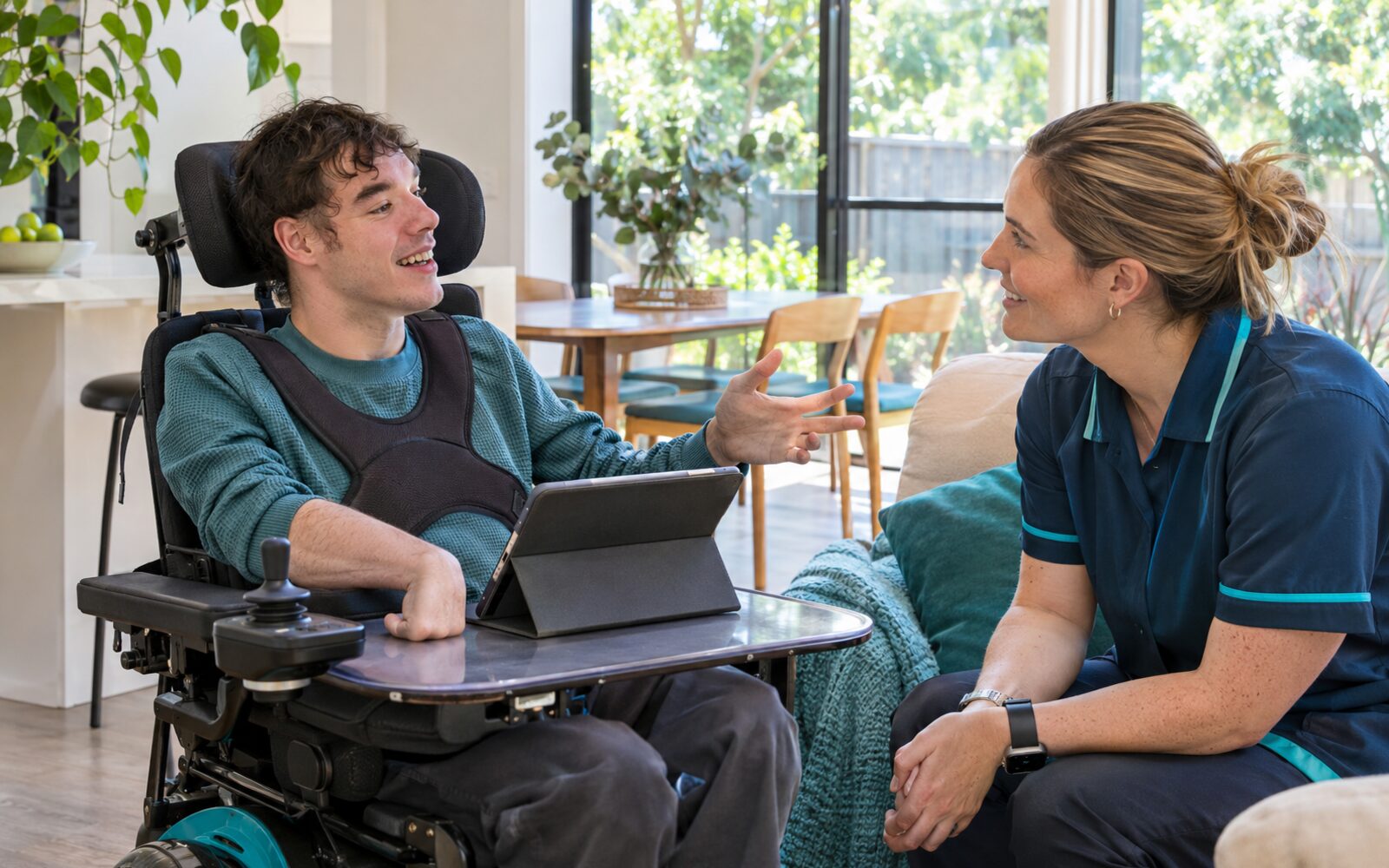
Support from workers who take the time to learn how you move and how you communicate.
Abundance Healthcare Group provides cerebral palsy NDIS support at home in Sydney and Perth for adults with high physical support needs. Personal care, positioning, mealtime help and community access are delivered by a small team who know the person well.
What it is
NDIS support for people with cerebral palsy
NDIS support for people with cerebral palsy covers help with personal care, eating and drinking, positioning and transfers, using equipment and taking part in the community. Cerebral palsy affects movement and posture for life, and the support a person needs often increases in adulthood.
Cerebral palsy care for an adult is different from the therapy-heavy years of childhood. The focus moves to living well: a reliable routine, comfortable positioning, managing pain and fatigue, and being out in the world. We build cerebral palsy support around what the person wants their week to look like.
What we deliver
Support we provide
We provide three kinds of support: personal care and mealtime assistance, positioning and transfers with the person's equipment, and help to get out and stay connected. A registered nurse is involved wherever swallowing, feeding tubes, skin or continence need clinical oversight.
Personal care and mealtime assistance
Showering, dressing, toileting and help with eating and drinking. Everyday care is delivered as NDIS personal care. Where swallowing is unsafe or a feeding tube is in place, workers are trained in our high intensity supports.
Positioning, transfers and equipment
Hoist transfers, wheelchair seating, standing frames, night positioning and splints, used as the physiotherapist and occupational therapist have set them up. Good positioning prevents pain, pressure injuries and contractures.
Getting out and staying connected
Work, study, day activities, sport, friends and family. We provide community participation support, and the same worker can provide transport.
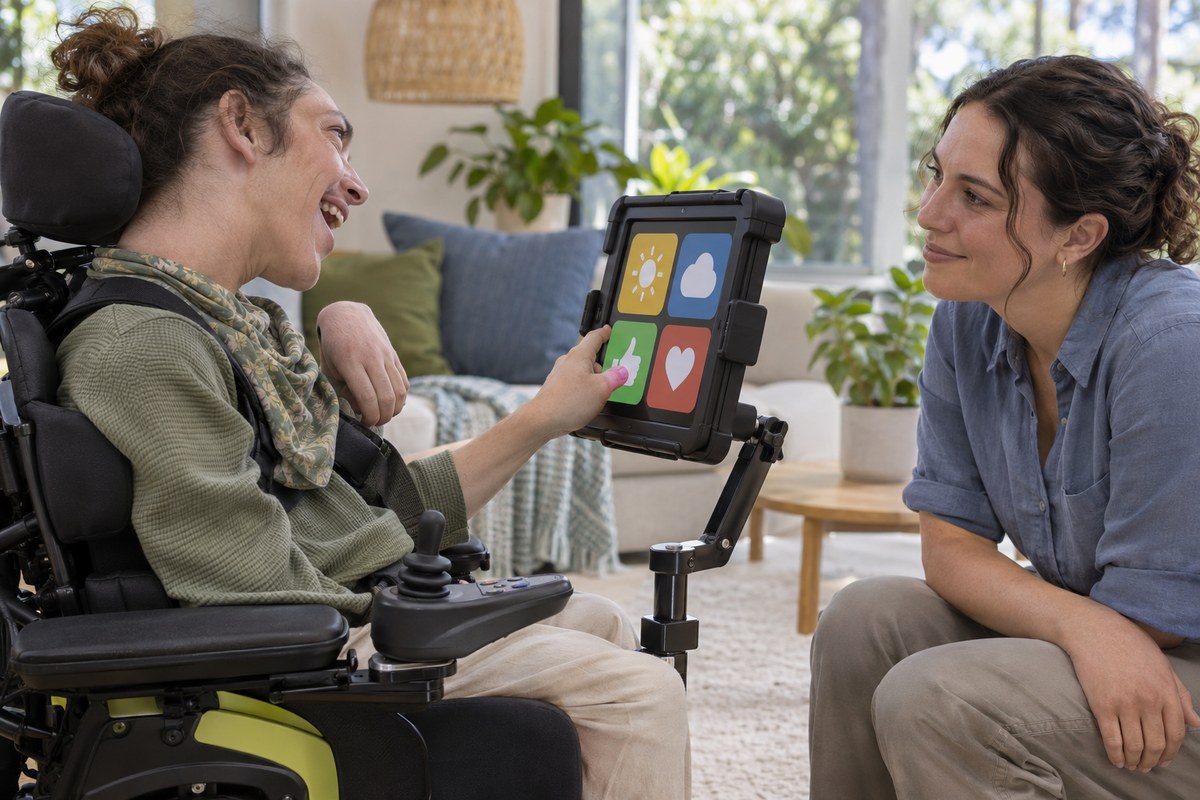
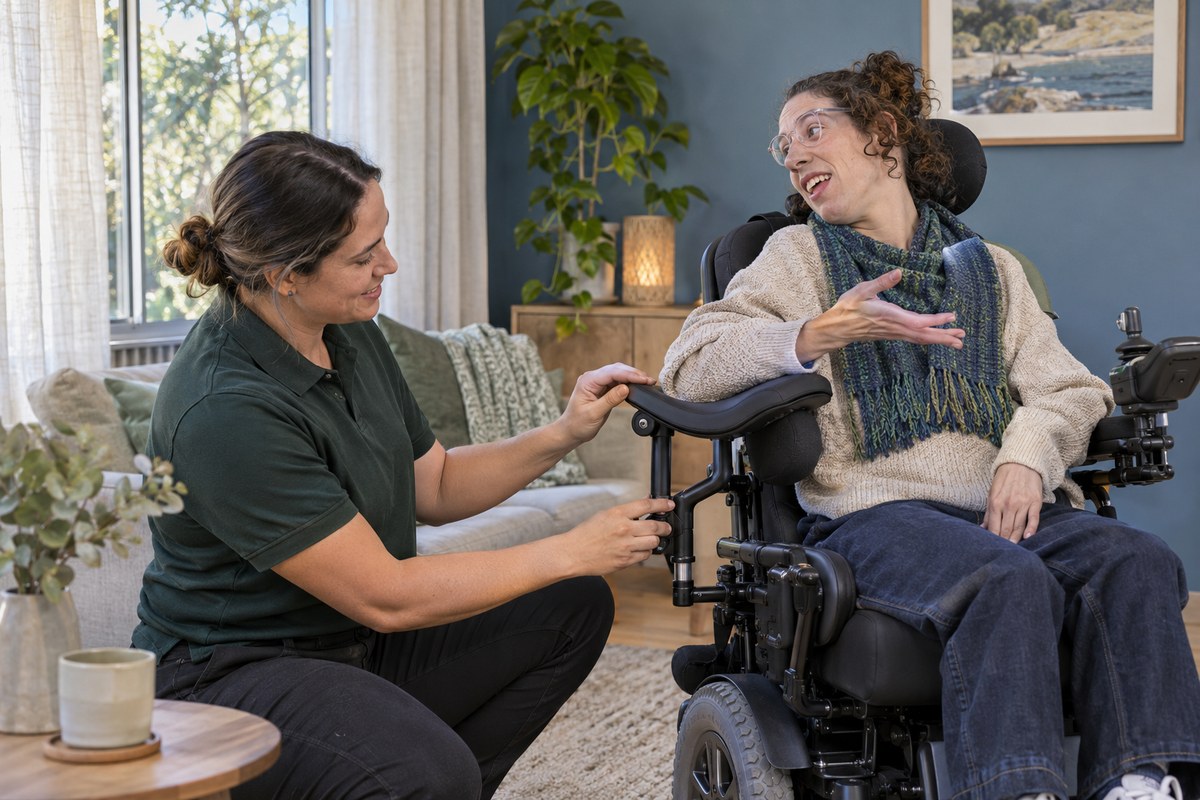
Workers learn each person's communication system before working alone.
What it is
Which support fits which need?
Most adults with cerebral palsy and high support needs use several NDIS supports at once. This table matches common needs to the support that meets them and the registration group it sits under, so you can check a provider is registered for each.
Need
Support
Registration group
Showering, dressing, toileting, meals
Personal care
0107 Assist-Personal Activities
Unsafe swallowing, modified meals, PEG feeds
High intensity support
0104 Assist Personal Activities High
Skin, continence or medication needs requiring a nurse
Community nursing care
0114 Community Nursing Care
Work, study, social and recreation activities
Community participation
0125 Participate Community
Travel to appointments and activities
Transport
0108 Assist-Travel/Transport
Who delivers it
Workers who learn how you communicate
Many people with cerebral palsy communicate with a device, a board, signs, eye gaze or speech that takes time to tune into. A worker does not work alone with you until they can understand you and you are comfortable with them.
We ask the person, their family and their speech pathologist to show us how communication works, and we write it down for every worker. Being understood is the basis of choice and control, so we treat it as a skill to be learned.
Funding
Which NDIS budgets pay for what
Cerebral palsy supports are funded mostly from the NDIS Core Supports budget: personal care and high intensity support under Assistance with Daily Life, and community participation in its own category. Equipment and therapy come from other budgets. We charge within the NDIA's current price limits.
If community outings are a large part of the week, note that funding for social, economic and community participation supports is being reduced from 1 October 2026 as plans are reassessed or renewed. Check your balance with your plan manager or coordinator.
Timing
Availability
We answer on capacity within one business day. Morning and evening personal care shifts fill first, so tell us your preferred times early. Overnight support is confirmed case by case, depending on which trained workers live near you.
How it works
Meeting your team first
You meet your workers before they start. A first visit covers your routine, your equipment and how you communicate. You decide whether each worker is a good fit, and nobody works alone with you until you are comfortable with them.
Enquire. You, a family member or a coordinator can enquire with the routine and the suburb.
Home visit. We see the equipment and the set up, and a nurse attends where there are clinical needs.
Meet the workers. Shadow shifts with someone who knows your routine, where possible.
Start. We check in after the first weeks and change what is not working.
Safeguards
Swallowing, seizures and pressure care
Three health risks need a written plan: swallowing difficulty, seizures and pressure on skin. Workers follow the speech pathologist's mealtime plan, the person's seizure management plan and the positioning schedule, and report changes to the nurse the same day.
Seizure support follows the neurologist's or GP's plan, including when to call an ambulance. Workers give emergency medication only where it is prescribed, written into the plan and they have been trained for that person.
Reviews
Keeping support working
Bodies with cerebral palsy change with age: more pain, more fatigue, sometimes less mobility. We review the routine with the person, raise it with therapists when positioning or equipment no longer suits, and send the coordinator evidence for plan reassessments.
Positioning is checked through the day, not only at transfers.
Where we work
Cerebral palsy support areas
We support adults with cerebral palsy across Greater Sydney and the Perth metropolitan area, at home and in the community. Give us the suburb and the times of day, and we will confirm whether suitable workers are available.
Common questions
Cerebral palsy support questions
Is cerebral palsy covered by the NDIS?
Yes. Cerebral palsy is a permanent condition, and people who meet the access requirements receive NDIS funding for supports related to their disability, including personal care, equipment, therapy and community participation.
Do you support adults or children?
Our cerebral palsy support is set up for adults with high physical support needs. If you are asking about a child or teenager, contact us with the details and we will tell you plainly whether we can help.
Can workers use my communication device?
Yes. Workers are shown your device, board or signs before they work alone with you, and we write down how you communicate so every worker uses the same approach. Your speech pathologist's guidance is followed.
Can you manage PEG feeding?
Yes. Workers are trained in enteral feeding and then on your own regime, and a registered nurse signs them off. The nurse reviews the stoma site and deals with any tube problems.
Will workers know how to use my hoist?
Yes. Workers complete manual handling training and are then shown your hoist, slings and transfer method in your home. Where your assessment requires two workers for a transfer, two are rostered.
Can support workers come to day activities?
Yes. A worker can support you at work, study, a day program or social activities, including personal care and mealtime help while you are there, if your plan funds it.
Families and coordinators comparing support services for cerebral palsy can ask us for a first meeting with no commitment.
Looking for a team that will get to know you?
Tell us the routine, the equipment and how you communicate. We reply within one business day with a clear answer on capacity.