Registered NDIS provider · Reg ID 4-JCLD6XENurse-led complex & clinical careServicing Sydney & PerthEnquiries answered same business dayRegistered NDIS provider · Reg ID 4-JCLD6XENurse-led complex & clinical careServicing Sydney & PerthEnquiries answered same business day
Daily routines done properly, by workers who have been taught your way of doing them.
Spinal cord injury NDIS support at home is mostly about routine: bowel and bladder care, skin checks, transfers and positioning, done the same way every day. Abundance Healthcare Group provides it in Sydney and Perth with trained workers and a registered nurse overseeing each plan.
What it is
NDIS support after a spinal cord injury
After a spinal cord injury, NDIS support covers the daily help a person needs at home: personal care, bowel and bladder routines, pressure care, transfers, and getting back into the community. The routines are set in rehabilitation, and our job is to carry them out reliably.
Spinal cord injury care at home is unforgiving of shortcuts. A missed skin check or a rushed bowel routine can lead to weeks in hospital. That is why we train each worker on the individual's own routine and equipment, not on a generic checklist.
What we deliver
Daily supports we provide
We provide three groups of daily support: bowel and bladder routines, skin checks and pressure care, and transfers and positioning. Each follows the plan the person brought home from the spinal unit, adjusted over time with their treating team.
Bowel and bladder routines
Bowel care on the person's schedule, intermittent or indwelling catheter care, and drainage bag changes. These are delivered by trained high intensity support workers who have been signed off on the individual plan.
Skin checks and pressure care
Daily skin checks, repositioning on schedule and correct use of cushions and mattresses. Any redness that does not fade is reported the same day, because pressure injuries are far easier to prevent than to heal.
Transfers, hoists and positioning
Slide board, pivot and hoist transfers as the physiotherapist or occupational therapist has taught them, with two workers where the assessment requires it.
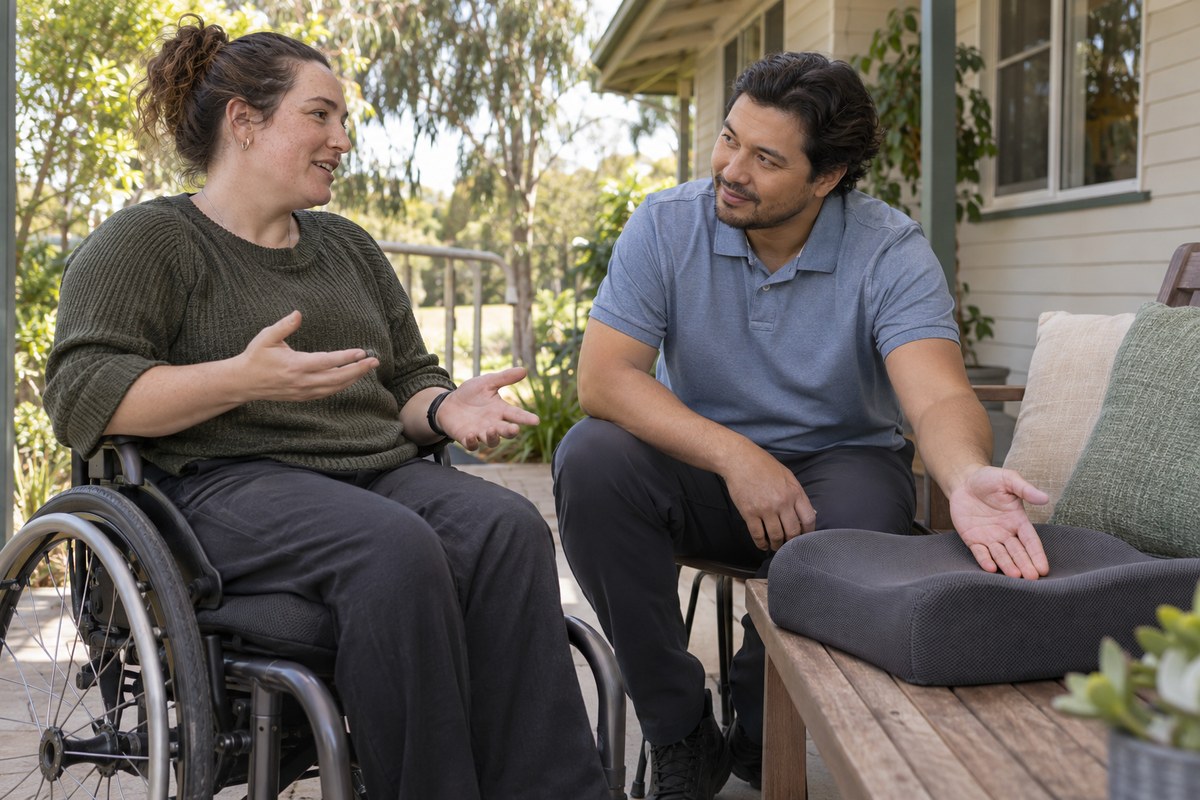
Cushions, mattresses and positioning are checked as part of every shift.
What it is
Which tasks need high intensity trained workers?
Bowel care, catheter care and pressure injury prevention are high intensity tasks under NDIS rules, so workers need task specific training and sign off. Everyday personal care does not. Catheter changes and wound dressings are nursing tasks.
Routine
Training required
Oversight
Showering, dressing, meals
General disability support training
Coordinator
Bowel care routine
High intensity training, signed off on the individual plan
Registered nurse
Daily catheter and bag care
High intensity training and sign off
Registered nurse
Catheter change
Nursing procedure
Treating team's schedule
Skin checks and repositioning
High intensity training in pressure care
Registered nurse
Wound assessment and dressing
Nursing procedure
Orders where required
Hoist and slide board transfers
Manual handling training on the person's own equipment
Therapist's instructions
Where a nurse is needed, we provide catheter and wound care from a nurse as part of the same plan. People sometimes search for SCI high intensity support as if it were one service. In practice it is this mix of trained workers and nursing.
Who delivers it
Workers trained for your routine
Most people with a spinal cord injury become the expert in their own care. We ask you to teach us your routine, then a registered nurse confirms each worker can do it your way before they work alone.
You stay in charge of how things are done. If you prefer a particular order, product or technique that is safe and in your plan, that is what workers follow.
Funding
How spinal cord injury supports are funded
Spinal cord injury supports are funded from the NDIS Core Supports budget: personal care and high intensity support under Assistance with Daily Life, and nursing as a disability-related health support. Equipment and home modifications come from other budgets.
The NDIS covers people who acquire a spinal cord injury before 65. If the injury is covered by a compensation or lifetime care scheme, that scheme may fund supports instead. For SCI, NDIS evidence usually comes from the spinal unit's discharge report.
Timing
Coming home from a spinal unit: timing
The safest discharges are planned weeks ahead. Tell us the expected date as early as you can. We reply on capacity within one business day, and the time between then and discharge is used to assess, write plans and train workers.
In Sydney, spinal injury rehabilitation is centred on Royal North Shore, Prince of Wales and Royal Rehab at Ryde. In Perth it is the state rehabilitation service at Fiona Stanley Hospital. We name them for geography and have no formal arrangement with any hospital.
How it works
Setting up care before discharge
Setting up before discharge means four things are ready on the day: a written plan for each routine, workers trained on it, equipment and supplies in the home, and a nurse's visit booked for the first week.
Referral. The social worker, coordinator or family sends the discharge summary and routines.
Assessment. A nurse visits the unit where the hospital permits and learns the routines from the treating team.
Training. Workers are trained and signed off, ideally with the person present.
First week. The nurse reviews how the routines are working at home.
Autonomic dysreflexia is a sudden, dangerous rise in blood pressure that can affect people with an injury at T6 or above. It is a medical emergency. Workers supporting someone at risk are briefed on the signs, the likely triggers and the person's own emergency plan.
Common signs are a pounding headache, sweating or flushing above the level of injury, and a blocked nose. Common triggers are a full bladder, a blocked catheter, a full bowel or a pressure area. The response in the plan usually starts with sitting the person upright, loosening anything tight and checking the catheter, and calling triple zero if the signs do not settle.
Other red flags workers report straight away are new skin damage, fever, cloudy or strong smelling urine, and increased spasm.
Reviews
Adjusting support over time
Needs change in the first year at home and again with age. We review routines with the person and the nurse, adjust hours when independence grows or health changes, and send the coordinator a written update for plan reassessments.
The person directs their own routine and the nurse confirms workers can follow it.
Where we work
Where we support people with spinal cord injury
We support people with spinal cord injury in their own homes across Greater Sydney and the Perth metropolitan area. Because bowel and catheter routines need signed off workers, we confirm availability by suburb before accepting a referral.
Common questions
Spinal cord injury support questions
Does the NDIS cover spinal cord injury?
Yes, for people who acquire the injury before 65 and meet the access requirements. The NDIS funds personal care, high intensity support, nursing related to the disability, equipment and home modifications. Injuries covered by a compensation scheme may be funded by that scheme instead.
Can support workers do bowel care?
Yes, when they have completed high intensity training in complex bowel care and a registered nurse has signed them off on your own routine. The worker follows your bowel plan and reports any change to the nurse.
What is autonomic dysreflexia and do your workers know the signs?
It is a sudden rise in blood pressure in people with an injury at T6 or above, and it is an emergency. Workers supporting someone at risk are briefed on the signs, the triggers and that person's emergency plan before their first shift.
Can you start before I leave hospital?
Yes. A nurse can assess you on the unit where the hospital permits and learn your routines from the treating team. Workers are trained before discharge so support is in place on the day you come home.
Do you provide overnight turns?
Where we can staff them. Overnight repositioning needs a worker in the home through the night, so we confirm each overnight roster case by case and tell you within one business day.
Can I keep my own routine and equipment?
Yes. Your routine and your equipment are the starting point. Workers are trained on them specifically, and changes are made only with you and your treating team.
If you would like to understand the nursing side first, our guide explains what a community nurse does. When you are ready to talk about spinal cord injury home care, make an enquiry.
Coming home after a spinal cord injury?
Tell us the routines, the equipment and the expected discharge date. A registered nurse reviews every enquiry and we reply within one business day.