Registered NDIS provider · Reg ID 4-JCLD6XENurse-led complex & clinical careServicing Sydney & PerthEnquiries answered same business dayRegistered NDIS provider · Reg ID 4-JCLD6XENurse-led complex & clinical careServicing Sydney & PerthEnquiries answered same business day
MND Support at Home for People Living with Motor Neurone Disease
Care at home that changes as quickly as the condition does.
Abundance Healthcare Group provides MND support at home in Sydney and Perth for people living with motor neurone disease. Support starts with what is needed today and scales up, under a registered nurse, as mobility, speech and swallowing change.
What it is
How we support people living with MND
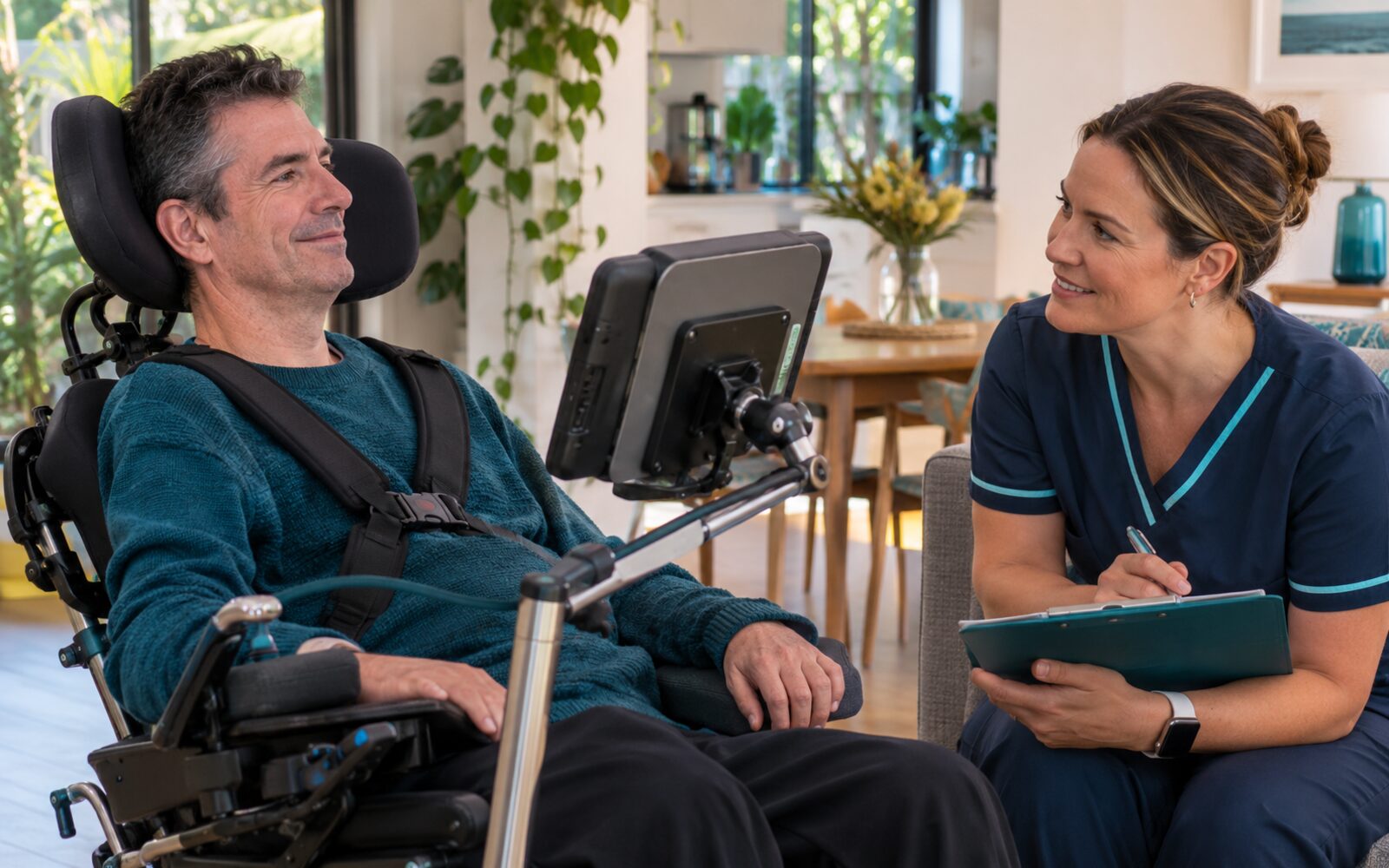
We support people living with MND at home with personal care, mobility and transfer assistance, PEG feeding, nursing and, where we can staff it, overnight care. A registered nurse writes the plans and rewrites them as the condition progresses, so support keeps up with need.
Motor neurone disease support has to be planned differently from most disability support, because the next change is always coming. We plan one step ahead: the equipment, the training and the hours that will be needed next, not only those needed now. Good MND care also means the person keeps making the decisions for as long as they wish.
What we deliver
Care that keeps pace as MND progresses
MND care changes in stages. Early on, the need is usually personal care and mobility. As swallowing changes, mealtime support and often PEG feeding are added. Later, many people need help through the night. We add each layer as it is needed.
Early stage: personal care and mobility
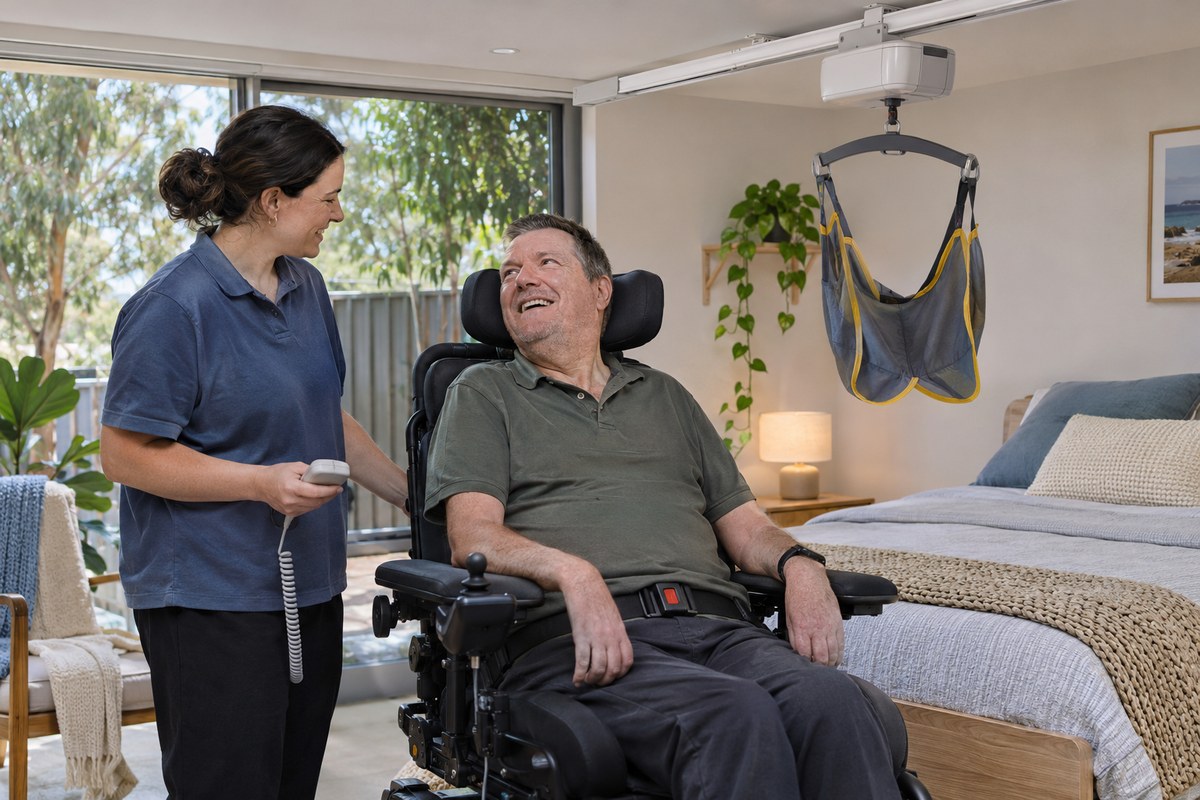
Help with showering, dressing and meals, and with moving safely as strength changes. Workers learn the person's equipment as the occupational therapist introduces it, from a shower chair to a hoist.
Swallowing changes and PEG feeding
When swallowing becomes unsafe, workers follow the speech pathologist's mealtime plan. If a feeding tube is placed, our workers are trained in PEG feeding and other high intensity supports and signed off on the person's own regime.
Overnight and 24 hour care
Repositioning, toileting and reassurance through the night. Overnight and round the clock rosters depend on trained workers living nearby, so we confirm them case by case and tell you early if we cannot cover the hours.
Workers are trained on each piece of equipment as it is introduced.
What it is
Which supports apply at each stage?
The support follows the need, not the calendar. This map shows the common needs in MND, the type of NDIS support that meets each one and who delivers it. People move through these at very different speeds.
Need
Support type
Who delivers
Help to shower, dress and eat
Personal care
Support worker
Transfers with a hoist or slide sheet
Personal care
One or two support workers, as assessed
Unsafe swallowing, modified meals
High intensity support
Worker trained on the mealtime plan
PEG feeds and site care
High intensity support
Worker signed off on the feeding regime
Tube problems, medication review
Community nursing
Registered nurse
Communication with a device or eye gaze
Any shift
Workers shown the person's system by the speech pathologist
Turning and care overnight
Personal care, overnight
Support worker, where we can staff the roster
Who delivers it
A small, consistent team with nurse oversight
People living with MND tell their story too many times. We keep the team small, so workers learn the person's communication, routine and preferences, and a registered nurse oversees the plan and provides nursing care at home when it is needed.
Consistency matters most when speech becomes difficult. A worker who already knows the person can understand them with far less effort on both sides.
Funding
NDIS funding for MND, and what happens after 65
People diagnosed with MND before 65 can apply to the NDIS, and the scheme funds supports that are reasonable and necessary for their disability. People who are 65 or over when they first seek support go through the aged care system instead.
Motor neurone disease can change faster than an NDIS plan review cycle, so coordinators often request a reassessment when function changes. Our nurse's reports give the NDIA dated evidence of what has changed and what is now required.
Timing
Starting quickly after diagnosis or discharge
We answer every MND enquiry within one business day. Personal care can start soon after a home visit and service agreement. Clinical supports such as PEG feeding start once workers are trained and signed off, which we begin as soon as the regime is known.
If a hospital discharge is planned, tell us the date. A nurse can assess on the ward where the hospital permits, so training is finished before the person comes home.
How it works
Working with your MND advisor, coordinator and clinic
We work alongside the people already involved: the MND association advisor, the support coordinator, the multidisciplinary MND clinic and the GP. They set the clinical direction. We turn it into daily routines and report back when something changes.
Breathing and swallowing are the two areas where MND carries the most risk. Each plan sets out the signs workers watch for, such as coughing at meals, breathlessness lying flat or morning headaches, and exactly who to call.
One limit is important to state clearly. We do not currently provide ventilator support, including day to day support for non-invasive ventilation as a high intensity task. If breathing support is part of the plan, or likely to be, tell us at referral so everyone is clear about what we can and cannot cover.
Reviews
Reviewing support as needs change
We review plans whenever function changes, not only on a set date. After each review the nurse updates the written plan, retrains workers on what is new and sends the coordinator a summary that can be used for a plan reassessment.
Families carry a great deal with this condition. MND support for families is part of the job: we explain what we are seeing, ask what they are noticing and adjust the roster so carers can rest.
Plans are reviewed when function changes, not only on a set date.
Where we work
MND support in Sydney and Perth
We support people living with MND across Greater Sydney and the Perth metropolitan area. For motor neurone disease support in Sydney, rosters are built from workers near the person's home, including Northern Sydney where trained workers are available.
Yes, for people who apply before they turn 65 and meet the access requirements. MND is a permanent and progressive condition, and the NDIS funds reasonable and necessary supports such as personal care, equipment, therapy and nursing related to the disability.
What support can someone with MND get at home?
Personal care, help with transfers and equipment, mealtime support, PEG feeding, nursing, community access and, where it can be staffed, overnight care. The mix changes over time and is set by assessments from the treating team.
Can you provide 24 hour care for MND?
Sometimes. Round the clock rosters need several trained workers living near the person, so we confirm them case by case. We answer within one business day, and we do not accept a roster we cannot sustain.
Do your workers manage PEG feeding?
Yes. Workers are trained in enteral feeding and then on the person's own regime, and a registered nurse signs them off before they work alone. The nurse handles tube problems and reviews the stoma site.
What happens if I was diagnosed after 65?
People who are 65 or over when they first apply are not eligible for the NDIS and use the aged care system, starting with My Aged Care. Your MND association advisor can help with that pathway.
Can you work alongside MND NSW or MNDAWA?
Yes. We work alongside whichever MND association advisor supports you, and their guidance informs our plans. We have no formal arrangement with either organisation.
How quickly can support increase?
Hours can increase as soon as the plan funds them and we have workers available. When function changes, tell us straight away: the nurse reassesses, and the coordinator can use that report to request a plan reassessment.
For anyone arranging MND home care, talk to our team early, before the next change arrives.
Living with MND, or supporting someone who is?
Tell us what is needed now and what has changed recently. A registered nurse reviews every enquiry and we reply within one business day.