Registered NDIS provider · Reg ID 4-JCLD6XENurse-led complex & clinical careServicing Sydney & PerthEnquiries answered same business dayRegistered NDIS provider · Reg ID 4-JCLD6XENurse-led complex & clinical careServicing Sydney & PerthEnquiries answered same business day
Bankstown NDIS Provider for High Intensity Supports
High intensity support that works with the family already doing the care, not around them.
In many Bankstown homes a relative already does most of the care, and does it well. Abundance Healthcare Group adds trained workers and a registered nurse to that arrangement. The family decides what to keep, the nurse writes the plan, and the high intensity tasks are shared so that no one person is on call every day of the year.
What it is
High intensity NDIS supports in Bankstown
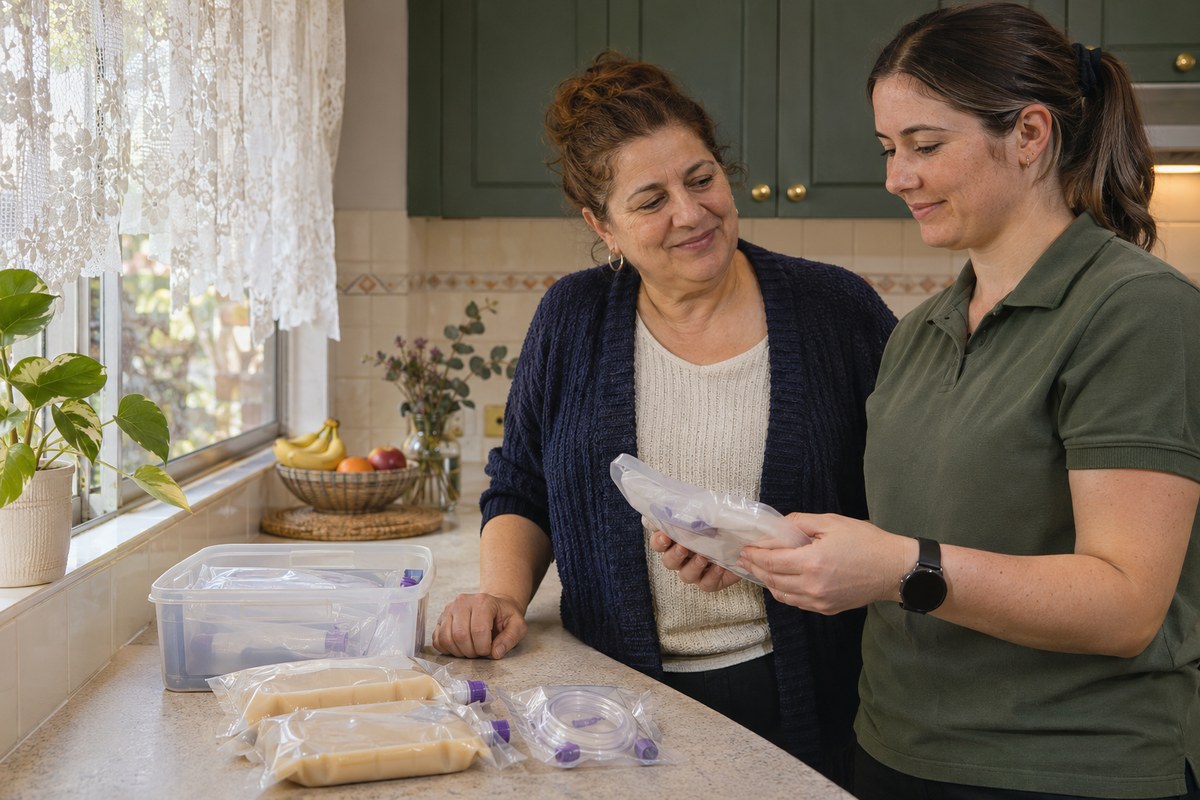
We provide high intensity NDIS supports in Bankstown: complex bowel care, PEG feeding, catheter care, set injections and mealtime support for severe dysphagia. A registered nurse writes the plan for each task, and workers are signed off on it before they work alone in the home.
If you are comparing NDIS providers, Bankstown has plenty to choose from. Far fewer are registered for high intensity work. Any NDIS provider in Bankstown can be checked on the public register, where registration group 0104 shows who is. This page is part of our disability services in South West Sydney.
What we deliver
What we offer Bankstown participants
Bankstown participants can combine four supports: high intensity daily personal activities, community nursing, daily personal care, and community access and transport. The mix depends on what the family wants to keep doing themselves, which we ask about before any roster is drawn up.
High intensity daily personal activities
The clinical parts of the day are covered by high intensity supports at home. Workers follow the nurse's written steps and report anything unusual on the same shift.
Community nursing at home
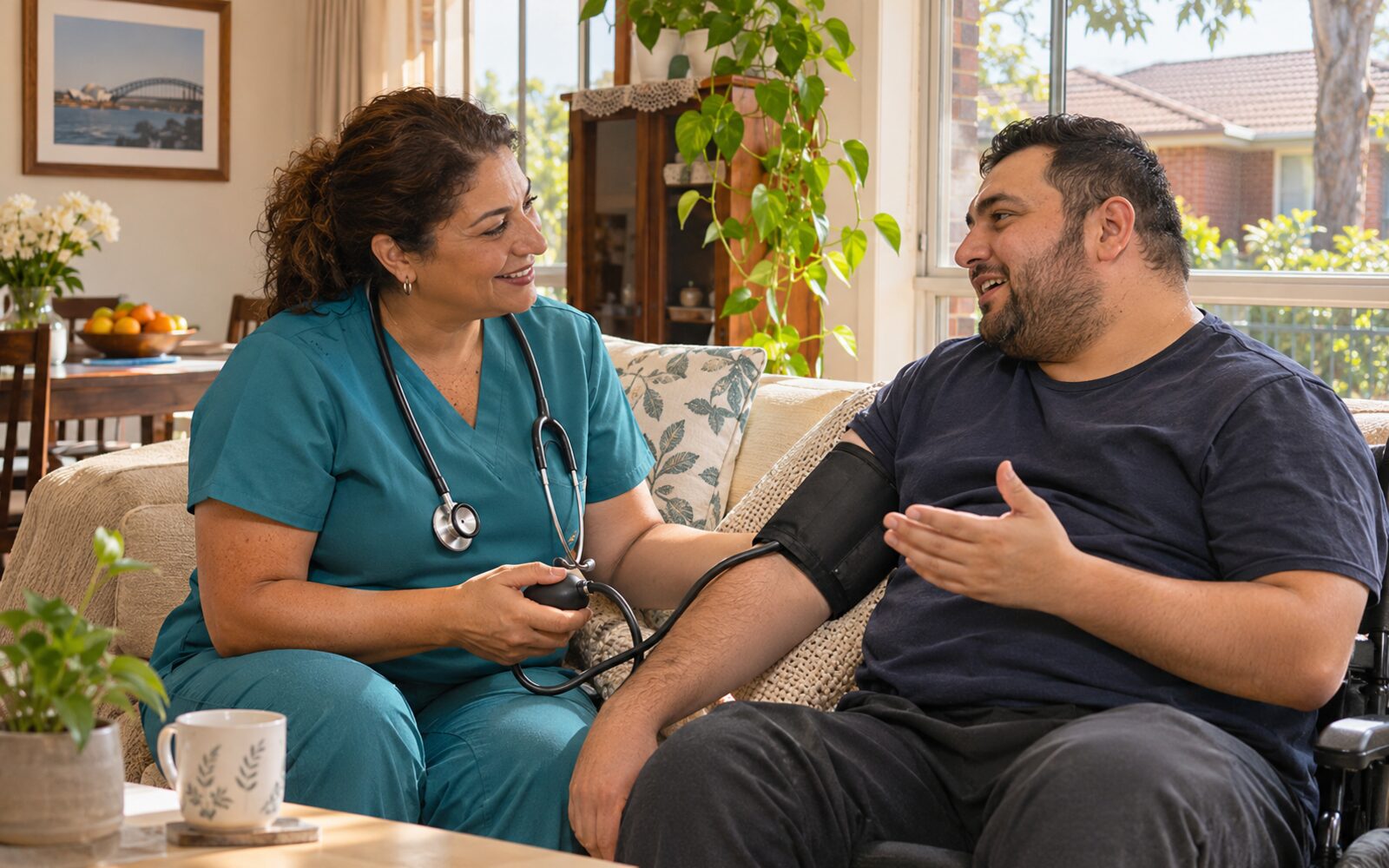
A registered nurse visits for tasks that need one, such as catheter changes and wound care, and to review how the daily routine is going for workers and family alike.
Daily personal care
Everyday personal care: showering, dressing, transfers and meals. Requests about the gender of the worker for these tasks are recorded and respected.
Community access and transport
With community participation support a worker goes along to the mosque or church, Bankstown Central, sport, or a relative's home, and can drive if needed.
Family carers decide which tasks they keep and which they hand over.
Local support
Bankstown-Lidcombe Hospital discharges
Bankstown-Lidcombe Hospital is the public hospital for this area and part of the South Western Sydney health district. When a participant is coming home with new clinical needs, we ask the family and the ward what the relatives are prepared to take on, then plan the rest.
That conversation is worth having before discharge day. A relative who is shown a routine on the ward may not feel able to do it alone at night. We name the hospital for geography only and have no formal arrangement with it.
What it is
Family carers and paid support: sharing the load
Care can be shared three ways: tasks a family member is comfortable doing, tasks a trained worker takes over, and tasks that need a nurse. Nothing is taken from a family that wants to keep it. The table shows a typical split, which each household adjusts.
Task
Family can do
Worker does
Nurse does
Tube feeds
Yes, once shown the plan
On rostered shifts
Reviews the plan and the site
Bowel care routine
If they choose to
On rostered shifts, to the plan
Writes the plan and checks competency
Catheter bag care
Yes
On rostered shifts
Changes the catheter
Showering and transfers
With the right equipment
Morning and evening shifts
Reviews manual handling risks
Medication
Prompting and packed doses
Prompting and recording
Gives nurse-only medication and reviews the chart
Overnight checks
Often the family
Confirmed case by case
Sets what to check and when to call
Funding
How funding works here
Supports are claimed from the participant's plan within the NDIA's pricing schedule. The plan funds paid workers and nursing. It does not pay family members who live in the home to provide care, except in rare circumstances the NDIA approves, so paid support is added alongside what relatives do.
For families using the NDIS in Bankstown, that distinction matters when a plan is reviewed. Our nurse's reports set out what the family provides and what is funded, which helps show that the paid hours are needed.
How it works
First week with us
The first week sets the pattern. A nurse assesses at home, the family shows us the existing routine, plans are written, and workers are trained on them before working alone. We start with fewer workers and add more once the routine is settled.
Enquiry. Families and coordinators can enquire with the suburb and the tasks.
Home visit. The nurse assesses and watches how care is done now.
Plans and training. Written plans, then training for workers and any relative who wants it.
First shifts. A familiar family member is present at the start if they wish.
Check in. The nurse reviews how the week went and adjusts.
Who delivers it
Training records and supervision
We keep a record for every worker showing which tasks they are signed off on, for which participant, and when competency was last reviewed. For high intensity supports the review is yearly, as the NDIS Commission's skills descriptors require. A nurse supervises the workers on each plan.
Abundance Healthcare Group is a registered NDIS provider, Registration ID 4-JCLD6XE. You can ask to see who on your roster is signed off for what. Complaints can go to us or to the Commission.
Local support
Recent support in Bankstown
Moments from the households we work alongside in Bankstown. Families decide whether a picture is shared and confirm it in writing, and we never show a face, a number plate or a house front.
Where we work
Canterbury-Bankstown suburbs we visit
We take referrals across the Bankstown side of the City of Canterbury Bankstown: Bankstown, Yagoona, Condell Park, Bass Hill, Chester Hill, Georges Hall, Greenacre, Punchbowl, Revesby, Padstow and Panania. Suburbs on the Canterbury side, such as Lakemba and Campsie, are confirmed by address.
South of the council, across Salt Pan Creek, we also support people in the Hurstville area.
Common questions
Bankstown NDIS questions
Can family members be trained alongside workers?
Yes, with the participant's consent. The nurse can take a relative through the same plan the workers use, watch them do the task and answer questions. Many families like knowing the routine even when workers do most of it.
Do you cover Revesby and Padstow?
Yes. Both are in the City of Canterbury Bankstown and inside our service area. Send the suburb and the hours and we will confirm which trained workers are available there.
Do you have female workers for personal care?
Tell us the preference and we record it against the roster. We confirm before the service starts whether we can meet it on every shift, and we tell you in advance if any shift cannot be covered that way.
Can you start after a Bankstown Hospital stay?
Yes. Let us know the discharge date early. A nurse reviews the discharge summary, talks to the family about what they will take on, and has plans ready for the first day home where notice allows.
Do you support prayer times and cultural routines?
Yes. Shift times, meal preparation, modesty during personal care and space for prayer are all discussed at the first visit and written into the plan, so every worker follows the same arrangements.
How do I move from my current provider?
Check your present agreement for the notice period and choose a changeover date. Before that date our nurse assesses and trains the new workers, ideally overlapping with the old routine, so care continues without a break.
Sharing complex care in a Bankstown household?
Describe who in the family does what today, and which parts you would like help with. We answer within one business day.