Registered NDIS provider · Reg ID 4-JCLD6XENurse-led complex & clinical careServicing Sydney & PerthEnquiries answered same business dayRegistered NDIS provider · Reg ID 4-JCLD6XENurse-led complex & clinical careServicing Sydney & PerthEnquiries answered same business day
Everyday care from trained support workers, with a registered nurse a phone call away.
NDIS personal care is help with the daily tasks most people do for themselves: showering, dressing, toileting, eating and moving around. Abundance Healthcare Group provides it in Sydney and Perth, and our nurses step in when a need becomes clinical.
What it is
What NDIS personal care includes
NDIS personal care covers hands-on help with showering, dressing, grooming, toileting, eating, taking packed medication and getting in and out of bed or a chair. The NDIS calls it assistance with daily personal activities, and providers deliver it under registration group 0107.
The names vary. A plan may say assistance with daily living, NDIS funding documents use daily personal activities, and the Commission's register lists the group as Assist Personal Activities. For anyone comparing NDIS personal care providers, they all mean the same support.
Personal care is not housework or community outings, which are funded separately, and it does not include clinical tasks. When a routine involves a feeding tube, a catheter or bowel care, it becomes high intensity personal care and needs a nurse's plan.
What we deliver
How our personal care is delivered
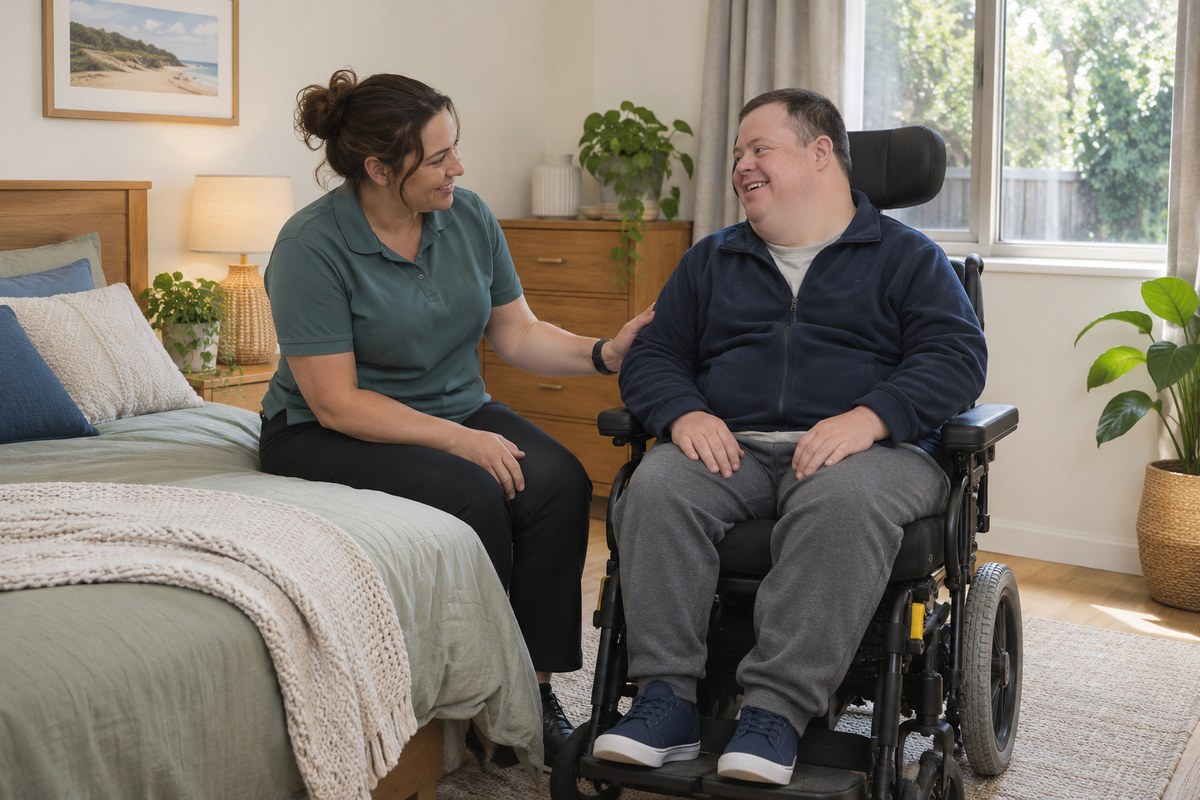
Personal care is delivered in the participant's home by support workers who have been shown that person's routine, equipment and preferences. Shifts are built around the times of day that matter most, usually morning and evening, and the same small team returns each week where we can manage it.
Morning and evening routines
Getting up, toileting, showering, dressing, breakfast and medication prompts, then the reverse at night. We agree the order and the timing with the participant, because a routine done in the wrong order can undo someone's whole day.
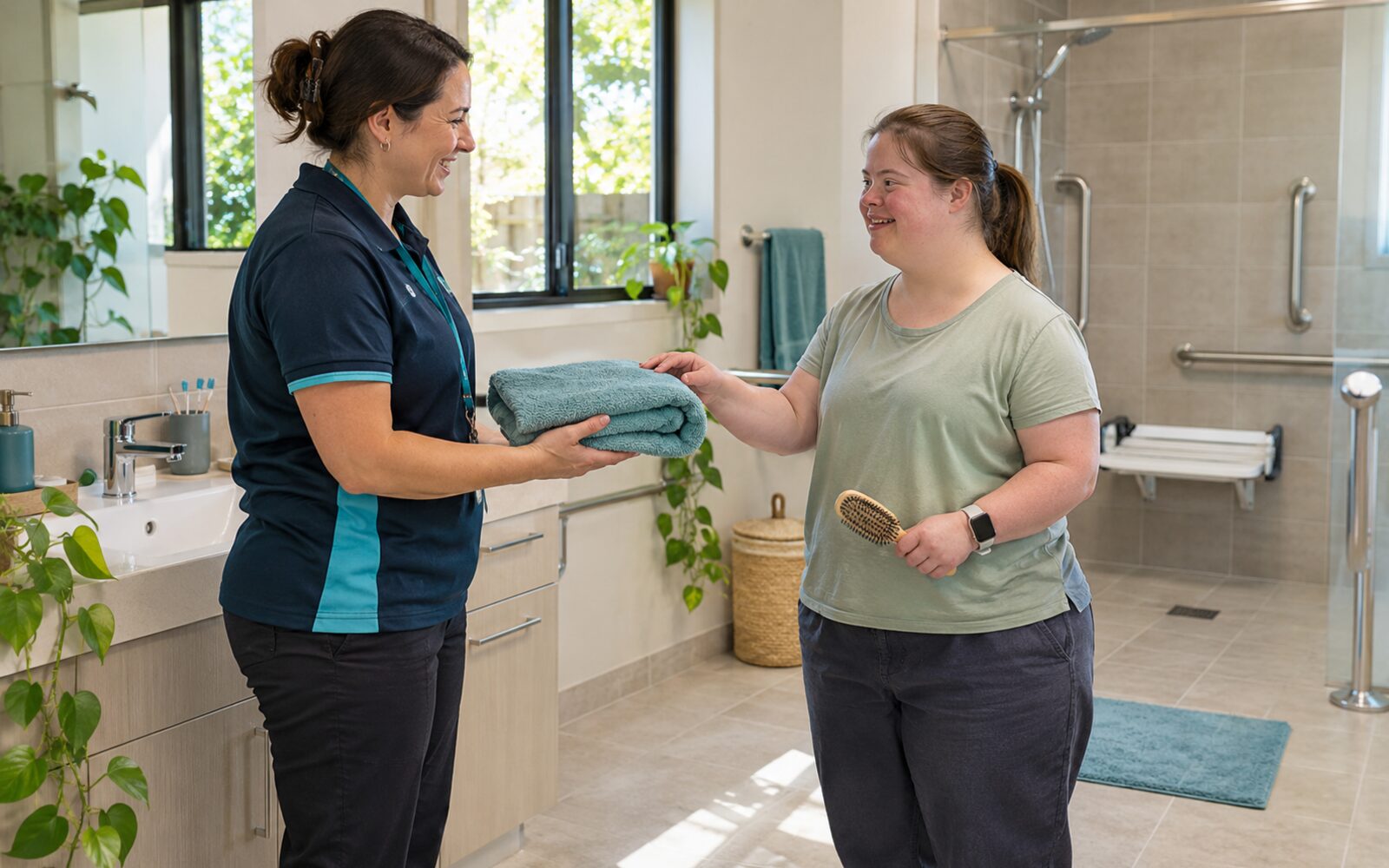
Showering, dressing and grooming
Workers follow the participant's lead on what they do for themselves and where they want help. Skin is checked as part of showering, and anything new, such as redness over a hip or heel, is reported the same day.
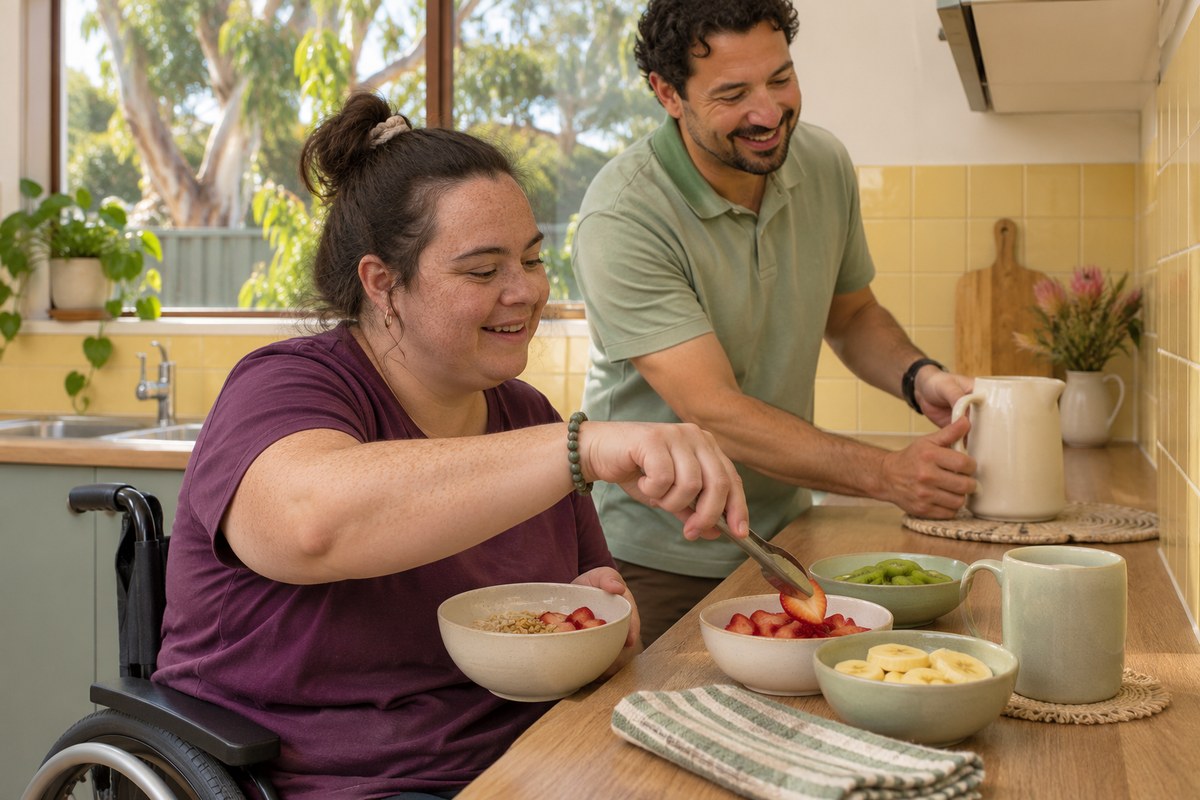
Mealtime and mobility assistance
Help with preparing and eating meals, and with transfers, walking and positioning. Workers use the participant's own hoist, slide sheets or wheelchair as their therapist has set them up.
Workers are shown each participant's own equipment before the first shift.
What it is
Standard or high intensity personal care?
Personal care is standard when a trained support worker can do it safely with general training. It is high intensity when the task carries clinical risk and needs a health professional's plan and task specific training. Many participants have both in the same shift.
Complex bowel care, PEG feeds, catheter care, set injections, severe dysphagia support
Who delivers it
Support worker
Support worker trained and signed off on that task, under a nurse's plan
Registration group
0107 Assist-Personal Activities
0104 Assist Personal Activities High
Price limit
Standard
Higher, set by the NDIA
If a wound needs dressing or a catheter needs changing, that is nurse delivered care, not personal care of either kind.
Who delivers it
Who your support workers are
Your support workers are part of our own team, hold an NDIS Worker Screening clearance and have been introduced to your routine before working alone. For participants with clinical needs, a registered nurse briefs the workers on what to watch for and when to call.
The NDIS Commission also requires registered providers of daily personal activities to assess the risks when a participant is supported by one worker alone. We do that assessment at the start and repeat it when circumstances change.
Funding
What NDIS personal care costs and which budget pays
Personal care is paid from the Core Supports budget, under Assistance with Daily Life. The NDIA sets the price limits, which rise for evenings, nights, weekends and public holidays. We charge within those limits, and you see every rate in the service agreement before the first shift.
We do not publish dollar figures because the limits change each year. If you are working out how far the assistance with daily living NDIS budget will stretch, send us the roster you have in mind and we will cost it against the current limits in writing.
Timing
Shift times and how soon we can start
Morning and evening shifts are the most requested and the first to fill, so tell us your preferred times early. We answer on capacity within one business day. Straightforward personal care can usually start soon after the service agreement is signed.
Overnight support is confirmed case by case. If we cannot cover a time safely, we say so, and we may be able to offer a partial start while more workers are introduced.
How it works
Getting started
Getting started takes a conversation, a home visit and an agreement. We ask about the routine, the home, the equipment and what matters to you. Then we propose a roster, introduce the workers and begin.
Tell us what you need. You can contact our team with the routine, the suburb and the times.
Home visit. We meet you, see the bathroom and bedroom set up and note the equipment.
Roster and agreement. You approve the shifts, the workers and the rates.
First shifts. A coordinator checks in after the first week and adjusts what is not working.
Safeguards
If something goes wrong
If a worker is late, a shift is missed or something happens during care, we want to hear the same day. Incidents are recorded and reviewed, reportable incidents are notified to the NDIS Commission, and you can complain to us or directly to the Commission.
Workers are trained to stop and call if they are unsure. A fall, a new skin injury or a sudden change in alertness is reported to the family and, where the participant has clinical needs, to the nurse.
Reviews
Keeping support consistent
Consistency comes from a small team and a written routine. We keep the number of workers as low as the roster allows, record the participant's preferences, and review the arrangement whenever needs, funding or the household change.
That matters most for people whose bodies and communication take time to learn. Our support for cerebral palsy, for example, depends on workers who know how the person moves and communicates.
The routine is written down so every worker does it the same way.
Where we work
Areas we provide personal care
We provide personal care across Greater Sydney and the Perth metropolitan area. In Sydney, rosters are easiest to build near our Campbelltown base and across the south west and south, including Fairfield and Hurstville.
For NDIS personal care in Sydney suburbs further from our base, availability depends on where workers live, so give us the suburb and we will confirm. Personal care often sits alongside help with getting out into the community.
Common questions
Personal care questions
What does NDIS personal care cover?
Help with showering, dressing, grooming, toileting, eating, transfers and prompting packed medication. It does not cover housework or outings, which are separate supports, or clinical tasks such as tube feeding, which are high intensity supports.
Can I choose a male or female support worker?
Yes, you can ask. Personal care is intimate and your preference matters. We match the request wherever we have a suitable worker available for those shifts, and we tell you before the start if we cannot.
Will I have the same workers each week?
That is the aim. We build a small team for each participant so the same faces return. Leave and illness mean an occasional change, and when that happens we send someone who has been briefed on your routine.
When does personal care become high intensity?
When the task carries clinical risk and needs a health professional's plan, such as bowel care, PEG feeds, catheter care or injections. The worker must then be trained and signed off on that task, and a nurse oversees the plan.
Is personal care paid from Core supports?
Yes. Personal care is funded from the Core Supports budget under Assistance with Daily Life. Core funding is flexible across most of its categories, so check with your plan manager or coordinator how much is available.
How much notice do you need to start?
We answer on capacity within one business day. After a home visit and a signed service agreement, straightforward personal care can begin as soon as workers have been introduced, depending on the shift times and where you live.
Whether your plan calls it personal care NDIS funding, NDIS personal care support or simply help to assist personal activities, the first step is the same: tell us the routine.
Looking for reliable personal care?
Tell us the routine, the suburb and the shift times. We reply within one business day with a clear answer on capacity.