Registered NDIS provider · Reg ID 4-JCLD6XENurse-led complex & clinical careServicing Sydney & PerthEnquiries answered same business dayRegistered NDIS provider · Reg ID 4-JCLD6XENurse-led complex & clinical careServicing Sydney & PerthEnquiries answered same business day
NDIS Provider for Sydney's Inner West: Complex Care in Terraces and Apartments
Terraces, walk-ups and narrow streets. Complex care has to be planned for the building as well as the person.
Much of Sydney's Inner West was built more than a century ago: terraces with steep stairs, cottages with narrow halls and walk-up flats with no lift. Abundance Healthcare Group provides nurse-led complex care in these homes, and starts by working out how the care, the equipment and the worker will fit.
What it is
Complex NDIS care in the Inner West
We provide complex NDIS care in the Inner West for people who need clinical tasks at home: tube feeds, bowel care, catheter care, wounds and medication a nurse must give. A registered nurse writes each plan, and part of the assessment is the home itself, because older houses change how care can be done.
As an NDIS provider for the Inner West, we cover suburbs from Marrickville and Petersham to Ashfield and Burwood. If you have been looking for an NDIS provider in Marrickville or Ashfield who will take on clinical care, this page explains how we work here. The overview of Sydney disability services covers the rest of the city.
What we deliver
Supports that work in compact inner city homes
Inner West participants can use high intensity daily personal activities, community nursing, daily personal care, and community access and transport. Each one is planned around the home: how many stairs, how wide the doors, where supplies can be kept and where a worker can park.
High intensity daily personal activities
Our high intensity personal care covers feeds, bowel care and catheters. In small homes we agree exactly where the feeding pump and supplies live, so every worker finds them.
Community nursing at home
Nurses visit for dressings, catheter changes, medication and reviews on the days they are working in the inner city. Parking and access notes are kept with the visit record.
Daily personal care
Showering and transfers in a narrow bathroom need planning. The nurse checks whether a shower chair, a worker and the participant fit, and asks for an occupational therapy review if they do not.
Community access and transport
Cafes on King Street, Marrickville Metro, Ashfield Mall, galleries and appointments. Many trips work best by train, bus or light rail with a worker.
Local support
Royal Prince Alfred and Concord: discharge with support
Royal Prince Alfred at Camperdown and Concord Hospital are the main public hospitals for the Inner West, both within the Sydney Local Health District. When someone is discharged home with clinical needs, the home's layout can decide whether the plan works, so we ask about it before the discharge date.
A hospital bed may not fit up a terrace staircase, and a hoist may not turn in a narrow room. We raise those questions with the ward and the occupational therapist early. Both hospitals are named for geography only, and we have no formal arrangement with either.
What it is
Stairs, narrow halls and parking: planning care in older homes
Older homes create predictable problems for care. Stairs limit where a person can sleep, narrow halls limit equipment, and street parking affects whether a worker arrives on time. The table shows the barriers we assess most often and the usual fixes.
Barrier
What we assess
Common fix
Steep internal stairs
Whether the person can use them safely, and with what help
A bedroom set up downstairs, or an occupational therapy review of stair options
Narrow hallways and doors
Whether a wheelchair, commode or hoist can pass
A different model of equipment, or a changed route through the house
Small bathroom
Whether the participant, worker and equipment fit
Shower chair instead of a commode, or a bathroom modification request
Walk-up flat with no lift
How the person leaves the building in an emergency
A written evacuation plan and, if needed, a housing review
Street parking only
How far a worker may have to walk carrying supplies
Shift start times that allow for parking, and supplies kept at the home
Shared terrace walls
Noise from equipment at night
Equipment placement agreed with the household
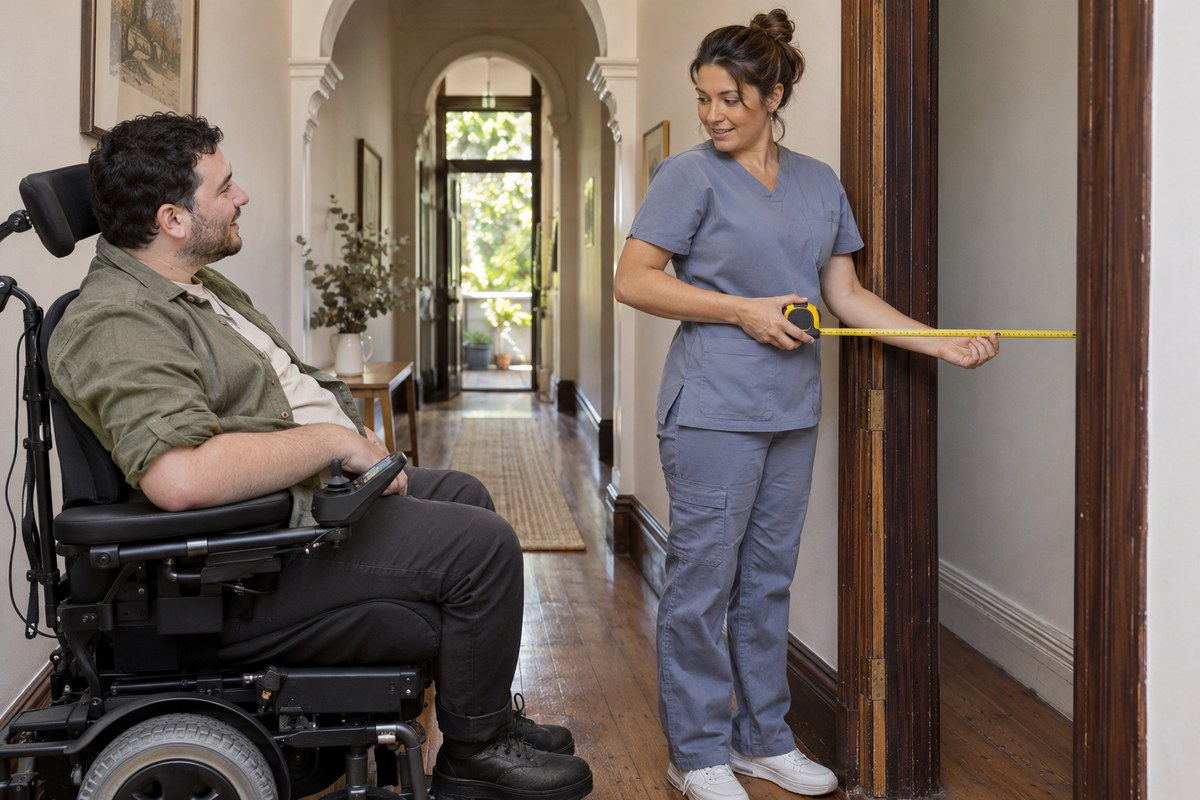
Doorways and halls are measured before equipment is ordered.
Funding
Pricing
Inner West participants pay through their NDIS plan, at or below the limits in the NDIA's pricing schedule. Nursing counts as a disability-related health support, while personal and high intensity care draw on Core Supports. The service agreement shows every line, including any travel, before a shift.
The Inner West is a long drive from our Campbelltown office, so travel is a fair question. It is charged only where the NDIA's rules allow and the agreement says so, and we tell you the amount before you sign.
Timing
When we can begin
We reply within one business day. In the Inner West, nursing visits can usually start sooner than a full roster, because workers have to be found within reach of the home and trained on the plan. We give you a realistic date, not a hopeful one.
Enquire. Use the form to enquire with the suburb, the home and the supports.
Home check. The nurse assesses the person and the building on the first visit.
Plans and equipment. Plans are written and equipment questions raised.
Equipment, then shifts. Equipment that must fit the home is sorted, workers are trained, and shifts start.
Who delivers it
How care is supervised
Supervision sits with one registered nurse per participant. That nurse trains and signs off each worker, sees the participant again after any admission, and takes the call when a worker is worried. Incidents are reviewed, and concerns can be raised with us or with the NDIS Commission.
We are a registered NDIS provider, Registration ID 4-JCLD6XE, and every worker holds an NDIS Worker Screening clearance. For people whose needs include mental health, our approach to psychosocial support is described on its own page.
Local support
Recent support in the Inner West
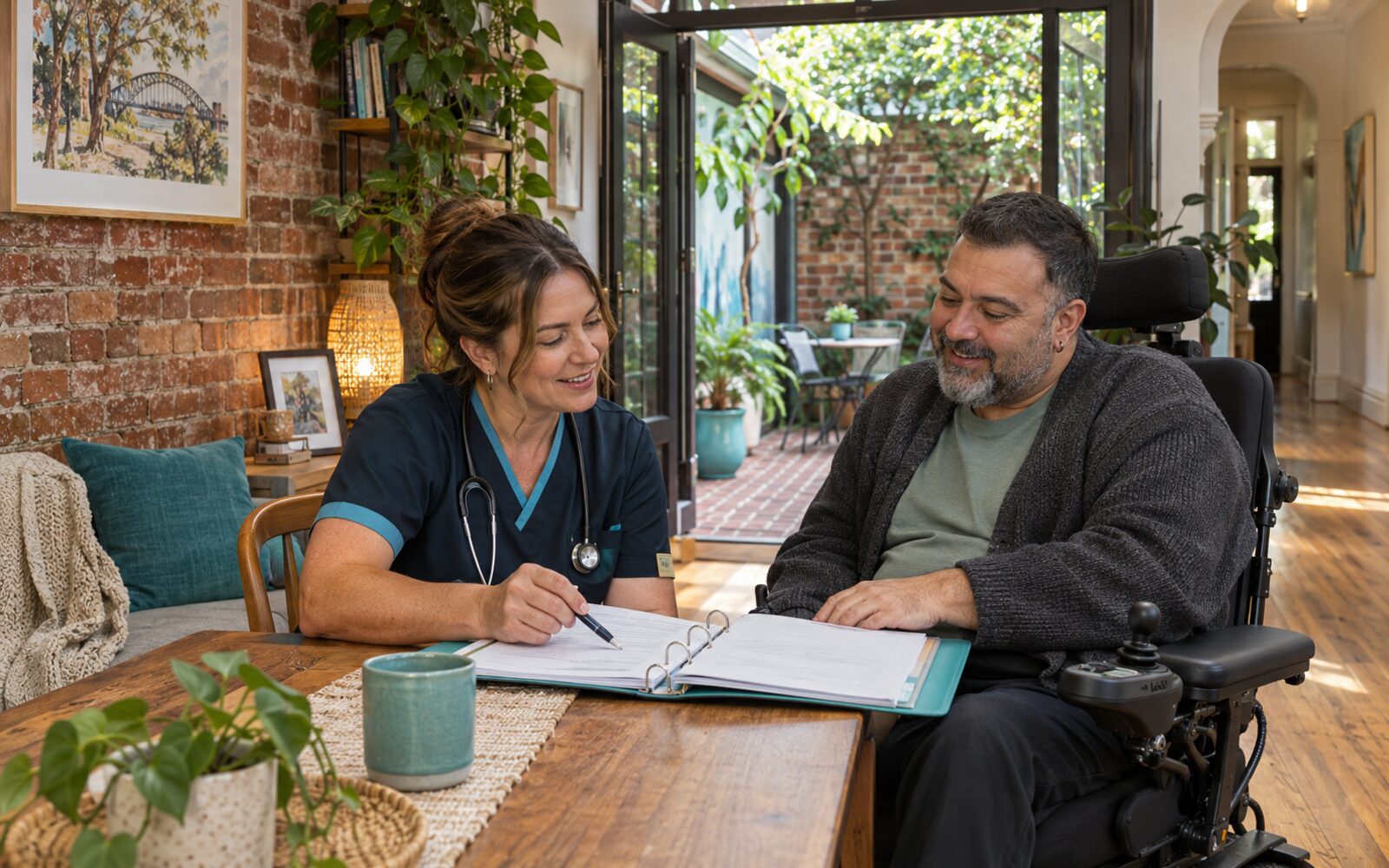
Images from inner city homes we visit. We only use a photo when the participant has agreed in writing, and we leave out street signs, front doors and anything else that could locate the home.
Where we work
Marrickville to Burwood: where we travel
We take referrals across the Inner West council area and Burwood: Marrickville, Dulwich Hill, Petersham, Stanmore, Newtown, Enmore, Leichhardt, Annandale, Lilyfield, Haberfield, Ashfield, Summer Hill, Croydon and Burwood. Canada Bay and Strathfield are confirmed case by case.
We do. Petersham, Newtown and Leichhardt are all Inner West council suburbs we visit, and the reply to your enquiry says which workers could cover your street.
Can you manage hoists in a terrace house?
Often, yes, but it depends on the room. The nurse checks door widths, turning space and floor strength before a hoist is ordered, and involves an occupational therapist where a different model or a room change is needed.
Do you take RPA discharges?
Yes. Discharge planners and social workers at Royal Prince Alfred can refer directly. Tell us about the home's stairs and layout early, because that can affect what equipment and support is needed on day one.
Is parking a problem for workers?
It can be. We record the parking arrangements for each home and allow for them in shift start times, so a worker circling the block does not mean a late start.
Do you support people in boarding houses?
We can, where the participant has a private room, the operator allows access and the clinical tasks can be done safely there. The nurse assesses the setting before we agree to a roster.
How soon can you start?
Within one business day you will have our answer and a date. In the Inner West the deciding factor is usually whether trained workers live within reach of your street.
Need complex care in an Inner West home?
Describe the house or flat, especially the stairs and bathroom, along with the care needed. Expect our answer within one business day.