

Choosing the right home-and-living arrangement is one of the biggest decisions you will make under the NDIS. It shapes everything from your daily routines to how quickly you can build independence. If you are weighing up Shared Living (sometimes called shared accommodation) against Supported Independent Living (SIL), you are not alone. Demand for both models has surged across Greater Sydney, and plan reviews in 2026 are increasingly focused on matching supports to rapidly changing housing markets. This article walks through the practical differences, benefits and watch-outs so that, when you sit down with your planner or an NDIS provider in Sydney, you have clear questions and evidence to back your choice.
Why Home-and-Living Supports Are Evolving in 2026
Sydney’s rental vacancy rate has hovered below 1.5 per cent since late 2024, pushing more participants toward shared arrangements. At the same time, the NDIA has tightened guidelines on funding for paid live-in supports, meaning participants must show clearer evidence that SIL delivers measurable goals. A few 2026 trends worth noting:
• Increased focus on value-for-money and participant outcomes, not simply hours of support.
• Mainstream smart-home tech (voice-controlled lights, automated door openers) is reducing the need for overnight support in some shared settings.
• More Specialist Disability Accommodation (SDA) builds are coming online in Western Sydney, giving participants extra location choice.
• The NDIA’s “ordinary life” principle is steering plans towards solutions that integrate naturally into local communities, whether that is a Marrickville share house or a small SIL in Ryde.
Understanding these shifts helps you assess which model aligns with both your goals and what the NDIA is likely to fund.
Quick Refresher – What Each Model Actually Means
Shared Living
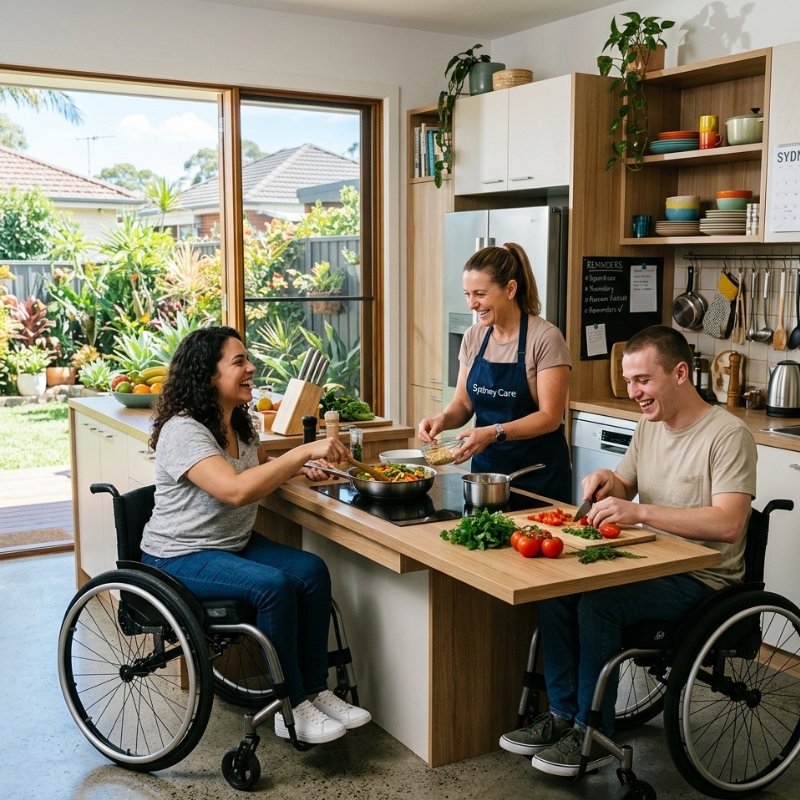
Shared Living places two or more NDIS participants (or a mix of participants and non-participants) in the same household. Supports are often informal or delivered on a rostered visiting basis. Key points:
• You usually sign your own lease or sub-lease.
• Support workers drop in for agreed tasks such as personal care, meal prep or community access.
• Overnight support is not guaranteed; housemates may share an on-call arrangement.
• Costs such as rent, utilities and groceries are split among residents.
Supported Independent Living (SIL)
SIL provides rostered 24/7 paid support inside the home. You still share with others, but a support provider coordinates staffing, compliance and service delivery:
• A formal Roster of Care outlines who helps with what, hour by hour.
• The NDIA funds the support component (not rent) under the SIL line item.
• Residents typically have similar support needs, making staffing more efficient.
• You may live in an SDA property or a standard house adapted for accessibility.
Side-by-Side Comparison Table – Key Differences at a Glance
The table below summarises factors most families ask about during plan review meetings.
| Factor | Shared Living | Supported Independent Living (SIL) |
| Typical Support Level | Visiting or drop-in (e.g., morning personal care, evening meal) | Rostered 24/7 paid support staff on-site or on-call |
| Funding Source | Core Support hours, sometimes informal supports | SIL line item under Core Supports, plus separate Core/Capacity Building funding |
| Household Structure | Flexible mix of NDIS and non-NDIS residents | Usually 2–4 NDIS participants with comparable needs |
| Independence Focus | High – residents manage many tasks themselves | Moderate – still encourages skills building but staff are readily available |
| Cost Splitting | Rent and utilities shared; support hours allocated individually | Rent paid individually; SIL funding covers shared support staff |
| Ideal For | Participants needing a few hours of help but wanting house-share life | Participants requiring regular personal care, overnight safety checks or behaviour support |
| Key Sydney Trend 2026 | Popular in Inner West where small terraces suit house-shares | Growing in new SDA villas in Western Sydney growth corridors |
The comparison is a guide only; your planner or support coordinator will match funding to your documented goals.
Which Option Suits Which Lifestyle?
No two plans or participants are the same, but some practical indicators can tip the scales.
Signs Shared Living May Be Enough Right Now
• You are confident managing medication with minimal prompting.
• Overnight you only need remote on-call assistance, not physical help.
• Your main goals revolve around social life, university, or work and you want fewer staff in the house.
• You enjoy choosing your own flatmates, perhaps friends from TAFE or relatives.
• You have strong natural supports nearby – for example, parents in the Northern Beaches who can visit.
Indicators You Might Benefit More From SIL
• You require regular assistance with transfers, feeding, or complex health tasks.
• Down-time anxiety spikes when no trained staff member is close.
• Your current share-house arrangements keep breaking down due to inconsistent informal help.
• Behaviour support strategies need trained, consistent implementation around the clock.
• You are moving out of hospital or residential aged care and need a stepping-stone environment with structured support.
Funding Pathways and Budgeting Pitfalls Sydneysiders Should Know
Accessing the right funding is often the stumbling block. Several factors shape whether the NDIA will approve SIL:
- Evidence of your daily support requirements documented over at least 7 days.
- A Housing Exploration Report (HER) from an OT or support coordinator.
- Proof that less-intensive options were explored and found unsuitable.
If you are leaning towards Shared Living, you will generally use standard Core Support hours. These must be budgeted wisely across personal care, community access and household tasks. In high-rent postcodes like North Sydney or Darling Point, splitting costs among flatmates helps keep Core hours for actual support, not extra rent burden.
For reference, the official NDIS Home and Living Supports page outlines current eligibility pathways and documentation requirements.
Budgeting tip for 2026: the NDIA’s new “value over vacancy” rule means SIL houses that sit half-empty may have their funding reviewed. Make sure any provider you are considering demonstrates strong housemate-matching processes to avoid mid-plan disruptions.
Common Mistakes to Avoid When Choosing or Switching Models
- Assuming SIL automatically covers rent – it does not. You still pay board or SDA rent.
- Under-documenting informal supports – if mum drops in daily with meals, planners may reduce paid hours unless the informal help is clearly temporary.
- Overlooking location fit – a brand-new villa in Oran Park might look amazing, but a two-hour commute to your Surry Hills job could undo daily routines.
- Not trialling support ratios – you can request a short-term “transitional” Core budget boost to test increased support before locking in SIL.
- Skipping compatibility checks – in Shared Living, mismatched household cultures cause many breakdowns. Always meet prospective housemates first or run a weekend trial.
Questions to Ask Before Putting the Plan Change Request In
• How will this model help me progress my specific goals in the next 12 months?
• What supports can technology replace and what must a human deliver?
• If my needs change, how quickly can the provider adjust rosters?
• What happens if a housemate moves out and funding is recalculated?
• Does the provider follow restrictive-practice guidelines if behaviour support is involved?
• How will emergency evacuations work, especially in older terrace layouts common in Newtown or Glebe?
Answering these questions with your support coordinator gives planners solid evidence that you understand risks and have mitigations in place.
FAQs
1. How long does it take to get SIL funding approved in 2026?
Approval time depends on the strength of your evidence and how clearly the Roster of Care links to your goals. With complete reports, many Sydney participants see decisions within 6–10 weeks, but complex cases can extend beyond 12 weeks.
2. Can I start in Shared Living and move to SIL later?
Yes. Many participants begin with visiting supports, then transition to SIL once documentation shows the need for more intensive help. A short-term accommodation trial often bridges the gap while funding is reviewed.
3. Does Shared Living suit people with high physical support needs?
It can, but only if overnight or hands-on assistance can be arranged reliably. If you need frequent repositioning or medical monitoring, SIL’s rostered staff model is usually safer and easier to justify to the NDIA.
4. Will moving into SIL affect my Disability Support Pension?
Your DSP continues, but rent contribution rules may change if you move into SDA. Always check with Services Australia and seek financial advice tailored to your situation before signing leases or agreements.
5. Is location really that important if supports are on-site?
Absolutely. Even with 24/7 staff, proximity to doctors, work, study and social networks impacts independence and mental health. Sydney traffic alone can turn a 15 km trip into an hour-long commute, reducing the benefit of on-site care.
Wrapping Up
Shared Living and Supported Independent Living are both valid pathways, but they serve different lifestyles, support levels and budgets. Use the comparison above, ask detailed questions and gather solid evidence before your next plan review. If you are still unsure, browsing a deeper dive such as our Supported Independent Living in Sydney guide can clarify individual steps, documentation and provider considerations. Staying informed and proactive gives you the best chance of securing a home environment that pushes your 2026 goals forward.

