Registered NDIS provider · Reg ID 4-JCLD6XENurse-led complex & clinical careServicing Sydney & PerthEnquiries answered same business dayRegistered NDIS provider · Reg ID 4-JCLD6XENurse-led complex & clinical careServicing Sydney & PerthEnquiries answered same business day
NDIS Community Participation for People with Complex Needs
Getting out, seeing people and taking part, with a worker who can manage what happens along the way.
NDIS community participation support helps a person leave the house and take part in ordinary life. Abundance Healthcare Group provides it in Sydney and Perth for people with complex needs, and a feeding tube, a catheter or limited energy does not rule an outing out.
What it is
What NDIS community participation support is
NDIS community participation support is funded help to take part in social, recreational and community life: seeing friends, shopping, sport, worship, study or volunteering. A support worker goes with the person, helps with whatever the disability makes difficult, and stays in the background where they are not needed.
Plans name it in several ways. The budget is called assistance with social and community participation, planners talk about NDIS social and community participation, and families often just say community access. Under the NDIS, community access and community participation are the same support.
What we deliver
Ways we support community access
We support community access in three ways: one to one outings chosen by the participant, help with appointments and errands, and support to join social and recreation activities. All are planned around the person's health needs, energy and transport.
One to one outings
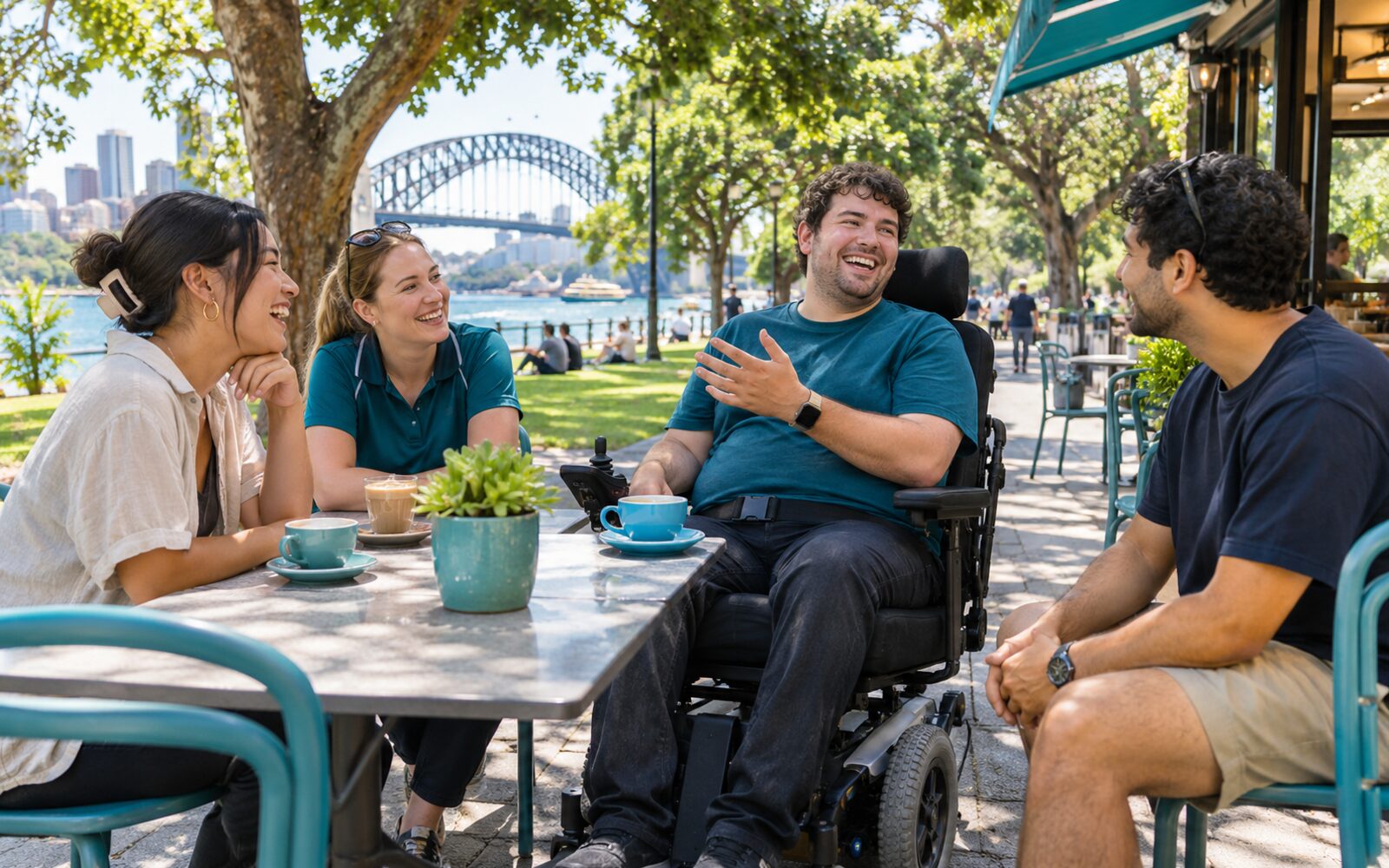
A cafe, the beach, a football game, a visit to family. The worker handles the practical side, such as transfers, toileting, meals and money, so the participant can concentrate on the outing itself.
Appointments and errands
Banking, shopping, the hairdresser, the chemist and medical appointments. Where the trip needs a driver, it can be combined with our NDIS transport services.
Social and recreation activities
Joining a class, a club, a faith community or a volunteer role. The worker's job is to help the person take part, then step back as confidence and friendships grow.
The worker manages the practical side so the outing stays the focus.
What it is
Community access with clinical needs: how it works
Clinical needs change the planning, not the answer. Before an outing we work out what has to be managed away from home, who needs to be there and what would make us turn back. A nurse sets those rules for each participant, and the worker follows them.
Need
What we plan for
Who attends
PEG feeds
Timing the outing around feeds, or carrying what is needed to give one while out
Support worker trained on the feeding plan
Catheter or continence care
Accessible toilets on the route, spare supplies, a private place to manage a problem
Trained support worker
Limited energy or pain
Shorter outings, rest stops, the quietest time of day
Support worker who knows the signs of fatigue
Seizure risk
The seizure plan, emergency medication if prescribed, how to get help quickly
Worker trained on the participant's seizure plan
Wheelchair and transfers
Access at the venue, parking, hoist or two worker transfers if needed
One or two workers, as the plan requires
Anxiety or distress in public
A familiar worker, an agreed exit plan, low pressure places first
Consistent worker who knows the person
Where care is due during the outing, the worker provides personal care on the day as part of the same shift.
Who delivers it
Matching workers to the person and the activity
We match workers on skills first and interests second. The worker must be trained for the participant's needs. After that we look for shared language, age, humour and interests, because a good outing depends on good company as much as on good planning.
For people living with mental illness, trust takes longer and consistency matters more. Our psychosocial support is built on the same workers returning week after week.
Funding
Funding for social and community participation
Community participation is paid from the Core Supports budget, under Assistance with Social, Economic and Community Participation. From 1 October 2026 the Australian Government is reducing funding for this category by 50 per cent, applied as each plan is created, reassessed or renewed over the following 12 months.
That change is the most important thing to check before planning regular outings. The Government has said participants will be told before their plan changes and can keep using their current plan until then. Ask your plan manager or coordinator what your balance is now and when your plan is due.
We charge within the NDIA's current price limits. Vehicle costs during an outing are claimed separately as activity based transport and are agreed in the service agreement. This information was checked against the Department of Health, Disability and Ageing on 19 November 2026.
Timing
Booking, notice and cancellations
Regular weekly outings are the easiest to staff, so book a standing time if you can. One-off outings depend on a suitable worker being free. Cancellation terms follow the NDIS pricing rules and are written into the service agreement.
We confirm or decline every request within one business day. If the participant is unwell on the day, tell us as early as possible so the worker can be reassigned.
How it works
Planning a first outing
A first outing is deliberately small. We choose somewhere familiar, keep it short and learn what the participant enjoys and what tires them. Longer and more ambitious outings follow once the worker and the participant know each other.
Plan the practical side. Access, toilets, timing, transport, what to carry.
Agree the limits. What the nurse or family want watched, and when to head home.
Go, then review. Afterwards we ask what worked and adjust the next one.
Safeguards
Risk planning in the community
Every participant with clinical needs has written instructions for outings: what to carry, what to watch for and who to call. Workers do not improvise with health. If something changes while out, they follow the plan, contact the nurse or call triple zero.
Risk planning is there to make outings possible. A plan that names the risk and the response usually means the answer to "can we go?" is yes.
Reviews
Building on what works
We review outings with the participant and family, keep what works and drop what does not. Over time the aim is more independence: more activities, more confidence and, where possible, friendships and routines that do not depend on a paid worker.
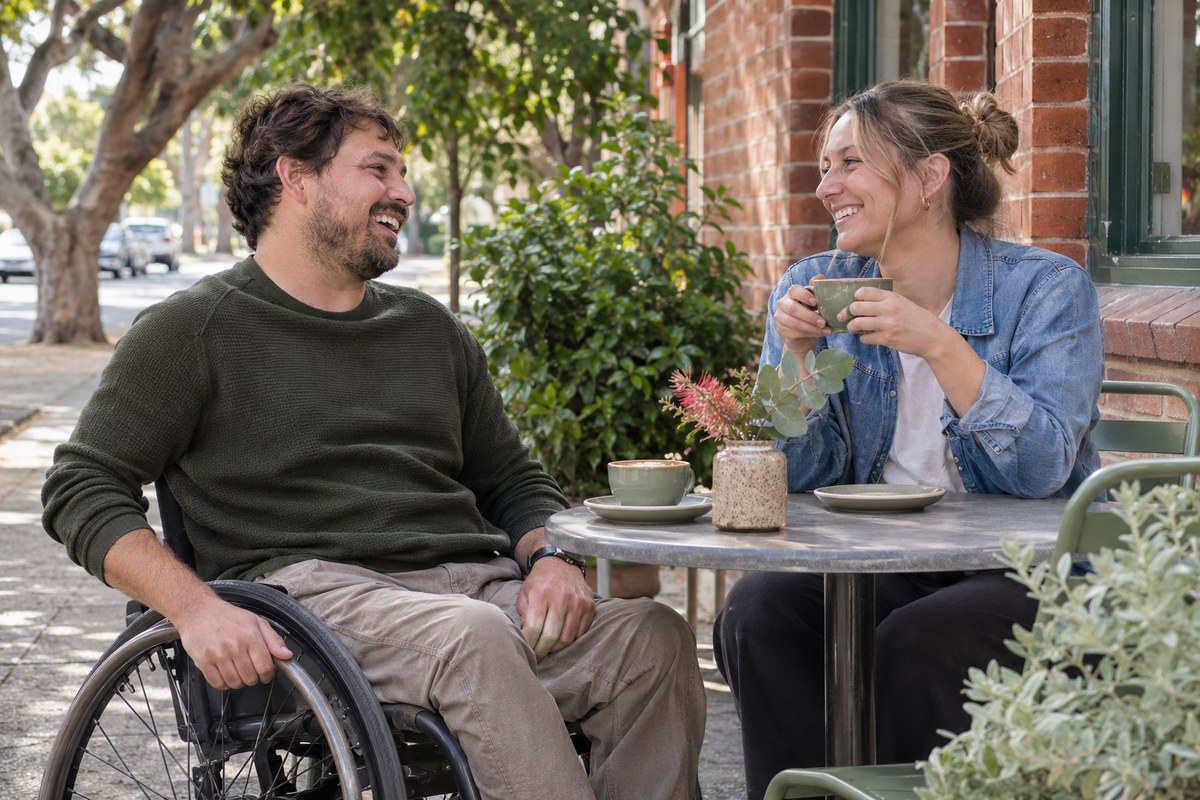
Outings start small and grow as confidence builds.
Where we work
Where we support community participation
We support community participation across Greater Sydney and the Perth metropolitan area. Outings start from the participant's home, so what matters is whether a suitable worker lives nearby. For NDIS community participation in Sydney, tell us the suburb and we will confirm.
Common questions
Community participation questions
What is community participation under the NDIS?
It is funded support to take part in social, recreational and community life, such as seeing friends, shopping, sport, worship, classes or volunteering. A support worker accompanies the person and helps with whatever their disability makes difficult.
Can someone with a PEG or catheter still go out with support?
Yes. The outing is planned around feed times or continence needs, the worker is trained on the participant's plan, and supplies are carried. A nurse sets the rules for what can be managed away from home.
Which budget pays for community participation?
The Core Supports budget, under Assistance with Social, Economic and Community Participation. Funding for this category is being reduced from 1 October 2026 as plans are reassessed or renewed, so check your current balance before committing to a regular outing.
Do you run group programs?
Our focus is one to one support. We are registered for group and centre based activities, so ask us what is available near you, or whether a shared outing with another participant could work.
Can the same worker provide transport?
Yes. The worker who supports the outing can also drive. The worker's time is charged as support, and vehicle costs are claimed as activity based transport at the rate agreed in the service agreement.
What is innovative community participation?
It is an NDIS registration group for newer or less traditional activities that build skills and independence in the community. We are registered for innovative community participation, so ask if you have an activity in mind that does not fit the usual categories.
For anyone searching for community participation NDIS providers who will take on clinical needs, the best test is to describe a real outing and ask how it would be handled.
Want to get out more, safely?
Tell us what the participant would like to do and what has to be managed along the way. We reply within one business day.