


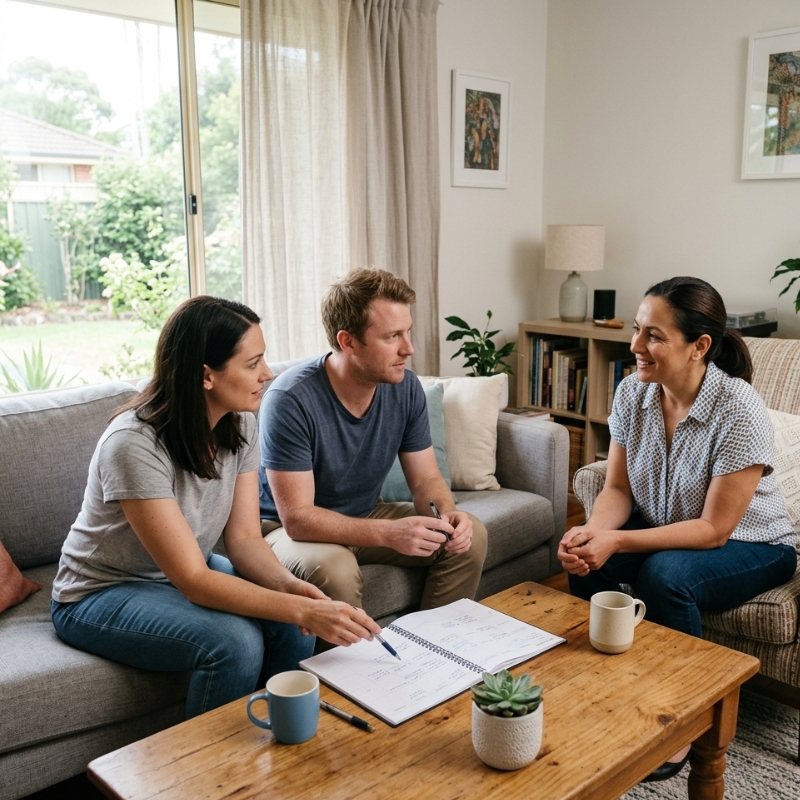
Shared living under the NDIS can look very different from one home to the next. Some people thrive with a predictable schedule and gentle prompting for daily task. Others want lots of flexibility and only need support at key times. Most sit somewhere in the middle: a home that feels like a home first, with routines that make life easier rather than restrictive.
This guide walks through what a “typical week” can look like in NDIS shared living in Sydney, with practical routines, household rhythms, and real-world examples. It’s written for participants, families, and support coordinators who want a clearer picture of day-to-day life.
Along the way, you’ll also see how routines can be adjusted over time to support goals, comfort, and independence, while still keeping the household running smoothly.
What “shared living” means in everyday terms
In everyday terms, shared living usually means:
• You live with one or more housemates
• You share some spaces (kitchen, lounge, laundry)
• Support is organised so that daily life is safer, more manageable, and more independent over time
• House routines help everyone know what’s happening and what’s expected
The routine isn’t meant to be rigid. Think of it more like a “default plan” that:
• Reduces decision fatigue
• Makes mornings and evenings calmer
• Helps with time management
• Supports skills practice (like cooking, laundry, budgeting, transport)
• Creates clear agreements for shared spaces
A good shared living routine is built around choice, dignity, and what actually works for the people living there.
The building blocks of a typical week
Even when days look different, most shared homes have a few repeating building blocks.
1) Morning routine structure
Morning is often where the household sets the tone. A typical morning routine might include:
• Waking up at a consistent time (or within a time range)
• Personal care tasks (as needed)
• Breakfast and hydration
• Checking the day plan (appointments, activities, transport, shopping)
• Packing what’s needed (phone, Opal card, keys, medication organiser if used, headphones, snacks)
For some people, “support” might be:
• Prompting and reminders
• Sequencing tasks step-by-step
• Setting up the environment (visual schedule, labelled storage, timers)
• Encouraging participation rather than taking over
2) Household rhythm and rosters
Shared spaces work best when expectations are clear. Many homes use:
• A weekly roster for shared chores (bins, wiping benches, vacuuming common areas)
• A shopping plan (who’s shopping, what’s shared, what’s individual)
• A simple meal plan (even if it’s only “two planned dinners + easy backups”)
• A quiet-time agreement (especially useful in the evenings)
The goal is fairness and predictability, not perfection.
3) Community access and errands
Sydney can be busy, noisy, and unpredictable—especially around major hubs and peak travel times. A weekly plan might include:
• One “big outing” day (shopping centre, medical appointment, community program)
• One “local errands” day (pharmacy, post office, quick groceries)
• One “skills practice” trip (short train ride, bus route practice, café order)
• Built-in buffers for travel time and crowds
4) Reset and recovery time
Routines work best when they include downtime. Many shared living plans include:
• A low-demand afternoon after big appointments
• “Recharge blocks” for sensory regulation (quiet room time, music, walk, weighted blanket, crafts)
• A predictable evening wind-down
5) Weekly house communication
Even a five-minute check-in can prevent a week of stress. Homes often use:
• A short house meeting (weekly or twice weekly)
• A noticeboard or shared calendar
• A “what’s working / what’s not” check-in
Keeping communication simple helps everyone feel heard without making it a big deal.
A typical weekday in shared living (example schedule)
This is one example of how a weekday might run. Times are illustrative—what matters is the pattern.
Morning (7:00–10:00)
• Wake up, hygiene, get dressed
• Breakfast and hydration
• Check schedule and transport plan
• Pack essentials (phone, charger, Opal card, water bottle, sun protection)
• Leave for activity / appointment / program, or settle into home tasks
Real-world example:
• If mornings are hard due to anxiety, a support worker might help by breaking the routine into “first step only” prompts: “Let’s sit up,” then “Feet on the floor,” then “Bathroom,” rather than a long list that feels overwhelming.
Midday (10:00–2:00)
• Community activity or appointments
• Light lunch and rest
• One household task or personal admin task (laundry load, cleaning own space, phone calls)
Real-world example:
• If appointments are in the city, the plan might avoid peak-hour trains and build in a quieter stop afterwards (for example, a calm café in a less crowded street, or a park break).
Afternoon (2:00–5:30)
• Skills practice (cooking prep, budgeting, shopping list, transport practice)
• Personal interests (gym session, art, gaming, library visit)
• Home reset (tidy shared areas, set up dinner plan)
Real-world example:
• If cooking feels too big, skill-building might start with one component only: washing vegetables, using a timer, or assembling a simple wrap—then gradually increase over weeks.
Evening (5:30–9:30)
• Dinner (shared meal, individual meal, or a mix depending on preferences)
• Clean-up routine (short and shared where possible)
• Wind-down (shower, medication routine if relevant, quiet activity)
• Prepare for tomorrow (clothes, bag, reminders)
Real-world example:
• If a housemate’s TV volume is stressful, the routine might include “headphones encouraged after 8pm” or a shared agreement about volume limits.
A typical week plan (Mon–Sun) with real-world variety
Below is a “typical week” template that balances routines, home tasks, community participation, and rest. Not every home will match this—but it’s a realistic starting point.
Monday: Reset and planning day
Common focus:
• Review the week (appointments, programs, goals)
• Create or confirm a simple meal plan
• Set up shopping list
• Quick house reset (bins, surfaces, laundry catch-up)
Example support approach:
• Use a visual calendar and do a 10-minute “week preview” to reduce surprises.
Q&A
How do you plan a week without it feeling controlling?
Plan the “must-dos” first (appointments, commitments), then add flexible blocks. Give choices: “Do you want shopping Tuesday or Thursday?” Predictability can coexist with choice.
Tuesday: Community access + personal goals
Common focus:
• Program attendance, therapy appointment, volunteer shift, or community group
• One personal goal activity (fitness, hobby, social group)
• Light household task at home
Sydney practical tip:
• If travelling by train, plan for service changes and allow extra time. Some people do better with a “quiet carriage preference” and off-peak travel whenever possible.
Wednesday: Home skills and life admin
Common focus:
• Laundry routine (wash, hang/dry, fold, put away)
• Cleaning personal space (short and structured)
• Personal admin (emails, appointments, budgeting practice)
Real-world example:
• A “laundry routine” might be broken into two days: wash/hang on Wednesday, fold/put away on Thursday, to reduce overwhelm.
Thursday: Shopping + meal prep
Common focus:
• Grocery shopping (individual and shared items separated clearly)
• Meal prep (one or two simple meals, snacks, lunches)
• Kitchen clean-down
If the household shares meals:
• Use a rotating plan: one person chooses the recipe, another helps prep, another sets the table, and another packs leftovers.
If the household doesn’t share meals:
• Still share systems: labelled fridge shelves, pantry tubs, and a “shared basics” list if applicable.
In many homes, the turning point is putting a few simple systems in place—like clear rosters, labelled storage, and short reset routines—so everyone feels supported with managing household tasks in shared living without the house running on guesswork.
Friday: Social connection and a lighter load
Common focus:
• Social activity or low-pressure outing (coffee, library, beach walk, local park)
• House tidy (short timer-based reset)
• Plan for weekend variation (events, visitors, quiet time)
Real-world example:
• If Friday afternoons often lead to fatigue, the plan might include a “no-demand block” after 3pm, with only optional activities.
Q&A
What if someone doesn’t want to join the household routine?
It depends on what the routine is for. If it’s about shared spaces (like bins, kitchen hygiene), the household still needs a fair agreement. A common approach is to offer alternatives: swap tasks, change timing, or reduce the task into a smaller version that still meets the household standard.
Saturday: Weekend flexibility (and real life)
Weekends often look less structured—and that’s normal. A shared living weekend might include:
• A planned outing (markets, sport, family visit, event)
• A “house project” (declutter a cupboard, deep clean a shared area)
• Extra downtime and recovery
Sydney examples:
• Quieter outings: local beaches early in the day, suburban walks, smaller shopping strips
• Higher-energy outings: major shopping centres, Darling Harbour, sporting events (with sensory planning)
Real-world example:
• If crowds are hard, the plan might include arriving early, having a clear exit plan, and bringing sensory supports (earbuds/headphones, sunglasses, fidget, water).
Sunday: Calm reset + preparation
Common focus:
• Check the next week’s schedule
• Prepare clothes, bags, and essentials
• Light meal prep
• House meeting/check-in
A Sunday reset reduces Monday stress dramatically.
Because no two households have the same needs, the most effective routine is the one that matches the people living in the home—whether that means more structure, more flexibility, or a blend—so it helps to understand the range of shared living support options that can be tailored around goals and comfort.
What “good support” looks like (without taking over)
A common worry is that support becomes “someone doing everything.” Strong shared living support usually looks like:
• Prompting first, then assistance if needed
• Breaking tasks into steps
• Modelling skills (“Let’s do the first one together”)
• Using tools (timers, checklists, visual schedules)
• Celebrating progress and gradually stepping back
The goal is sustainable independence, built at a pace that feels safe and achievable.
When routines are designed well, they don’t create dependence—they create momentum, using prompts, modelling, and gradual step-down support that keeps progress realistic and measurable while building independence in shared living over time.
Real-world scenarios (and how routines help)
Scenario 1: Mornings are chaotic and stressful
What it can look like:
• Running late, missing breakfast, forgetting essentials
Routine fixes that help:
• Pack the night before (keys, Opal card, water bottle)
• A 3-step morning checklist (not 12 steps)
• “Time anchors” like a single alarm for “start getting ready” and one for “leave”
• Breakfast defaults (the same easy option most days)
Scenario 2: Housemates clash about cleaning
What it can look like:
• Resentment, passive conflict, mess building up
Routine fixes that help:
• A roster that’s simple and visible
• Short tasks, not huge tasks
• Clear definition of “done” (for example, “wipe bench and stove,” not “clean kitchen”)
• A weekly 10-minute reset together
Scenario 3: Sensory overload after busy outings
What it can look like:
• Shut-down, irritability, or exhaustion
Routine fixes that help:
• A planned recovery block after big outings
• Quiet space agreement
• “Low-demand” dinners on big days (leftovers, simple meals)
• Comfort items ready at home
Scenario 4: Appointments disrupt the whole day
What it can look like:
• Everything else collapses because the appointment takes all the energy
Routine fixes that help:
• Do only one major task on appointment days
• Prepare paperwork the night before
• Use a consistent “appointment kit” (documents, water, snack, list of questions)
• Build in travel time buffers (Sydney traffic and public transport changes happen)
Household agreements that reduce stress
These are common “house rules” that keep things fair and calm. They work best when written simply and reviewed regularly.
Shared space agreements
• Kitchen clean-down after use (simple checklist)
• Food storage rules (labelled shelves)
• Laundry scheduling if machines are shared
• Quiet hours (especially evenings)
Visitors and privacy
• Notice before visitors (when possible)
• Respect for private spaces
• Clear rules about borrowing items (ideally: don’t, unless agreed)
Communication basics
• Use calm language
• Bring issues to a scheduled check-in where possible
• Focus on solutions and shared goals
Q&A
Do we have to do house meetings?
Not always, but a short, predictable check-in can prevent bigger problems. Even 5–10 minutes weekly can help: what’s working, what’s not, what needs changing this week.
What the NDIS typically covers (and what it usually doesn’t)
It’s important to understand the difference between support and everyday living costs. The NDIA explains home and living supports, including what’s typically considered day-to-day living expenses, on its participant guidance pages. A helpful starting point is the NDIA Home and Living Information.
In plain terms:
• Supports may help you do tasks safely and build skills
• Ordinary daily costs (like groceries and general household items) are usually personal living expenses
If you’re unsure how this applies to a specific situation, it’s worth checking the plan documentation and getting guidance through appropriate channels.
Signs your routine needs adjusting
Routines should serve the people living in the home. It may be time to adjust if:
• The schedule creates frequent distress or shutdown
• People are regularly missing meals, hygiene, or appointments
• Conflict about chores is constant
• One person is doing most household tasks by default
• The routine has no downtime, and burnout is building
• Goals aren’t progressing because tasks are too hard or too easy
A good adjustment keeps the same core structure but changes the “dose”:
• Smaller tasks
• More support at key times
• Clearer choices
• Better sensory planning
• More recovery time
Practical tools that make shared living easier
You don’t need fancy apps to make routines work. Simple tools often make the biggest difference:
• Visual weekly planner on the fridge
• Task cards for common routines (laundry, kitchen clean-down)
• Phone reminders for appointments and medication times (where relevant)
• Timer for short “reset sprints” (10 minutes can change a room)
• A shared shopping list system (paper or phone)
• Labelled storage in pantry and fridge
• A “leaving the house” checklist near the door
FAQ
What is NDIS shared living, in simple terms?
It’s a home where you live with others and have supports organised to help daily life run smoothly, safely, and with increasing independence over time. The exact routine and support level depend on individual needs and goals.
How structured is a typical week?
Most weeks have a predictable base (morning/evening routines, roster basics) plus flexible blocks for outings, appointments, and downtime. The best routines feel supportive, not controlling.
Who decides the routine?
Ideally, routines are built around participant choice, household agreements, and practical needs (like shared spaces). Adjustments should be made when routines aren’t working.
What if I don’t get along with a housemate?
Start with clear, simple agreements and a short weekly check-in. Many conflicts reduce when expectations are visible (like a roster) and when people have a predictable quiet time and privacy.
How does shared living support build independence?
By prompting, modelling, and gradually stepping back as skills strengthen—so the person does more for themselves over time, with the right supports in place.
What should a family look for in a healthy shared living routine?
Look for predictability with flexibility, respect for choice and privacy, calm communication, fair household agreements, and clear signs the person is progressing toward their personal goals.
)
&description=&image=https://abundancehealthcaregroup.com.au/wp-content/uploads/2026/05/NDIS-Shared-Living-What-a-Typical-Week-Looks-Like-Routines-Support-and-Real-World-Examples.jpg)