


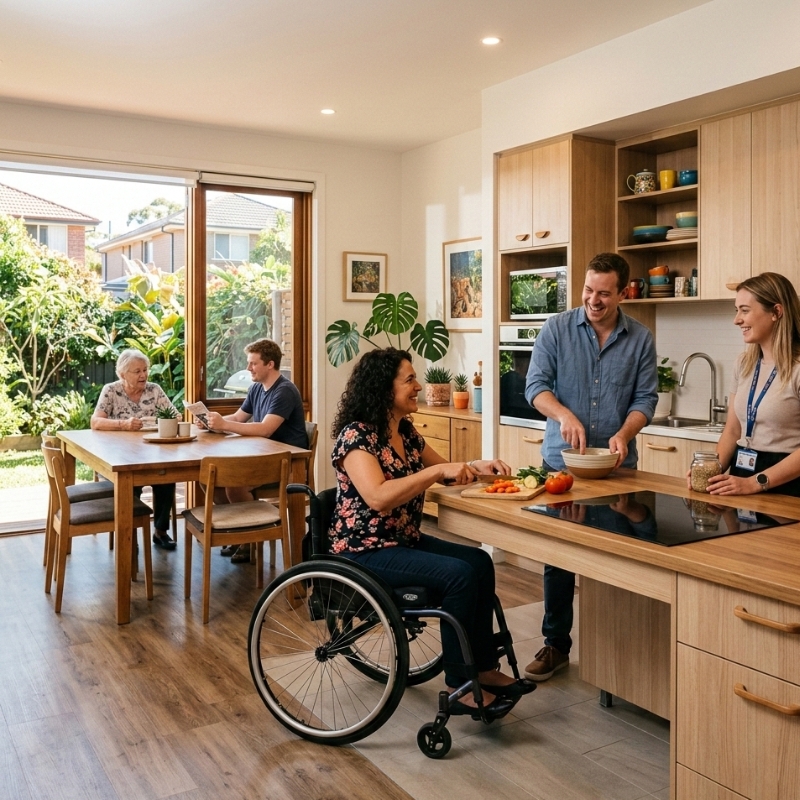
Shared living can be a great option if you want more independence, the right level of support at home, and the social benefits of living with others. For many people using NDIS in Sydney, it offers a practical way to access tailored supports while building confidence in a shared environment. But it’s not a one-size-fits-all choice. The best shared living arrangements are built around compatibility, clear routines, and supports that help you live your life your way.
In this guide, you’ll learn what “shared living” typically looks like under the NDIS, how supports like Supported Independent Living (SIL) may fit, who shared living tends to suit best, and what to clarify before making any changes.
What “shared living” usually means under the NDIS
Shared living is exactly what it sounds like: you live in a home with one or more housemates, and you receive supports that help you manage daily life, stay safe, and build skills.
The NDIS doesn’t fund “a house” as a lifestyle choice. Instead, the NDIS may fund the supports you need to live as independently as possible, depending on your goals and support needs. In many cases, shared living is the setting where those supports happen.
The NDIS “Home and living” information is a helpful starting point because it outlines the different home and living support pathways (including SIL and other options). You can read it here: NDIS home and living supports.
The home is shared, the support is individualised
Even when you share a home, your support is still about you:
• Your goals (independence, routines, social connection, health, community participation)
• Your support needs (prompting, supervision, hands-on help, overnight support)
• Your preferences (privacy, cultural needs, communication style, sensory needs)
A well-designed shared living arrangement should protect your choice and control while making day-to-day life more manageable.
Shared living isn’t always SIL (but SIL often happens in shared living)
People often use “shared living” and “SIL” as if they mean the same thing. They’re related, but not identical.
• Shared living describes the living arrangement (sharing a home with others).
• SIL describes a type of funded support (help or supervision with daily tasks in your home to build skills and live as independently as possible).
Some people live in shared homes with light support that don’t look like SIL. Others have a SIL arrangement where supports may be rostered across the household (while still being tailored to each person’s needs).
What does day-to-day life look like in shared living
Shared living can be calm and predictable when the household is set up with:
• Clear expectations
• Consistent routines
• A good match between housemates
• Supports that focus on building skills (not just “doing everything for you”)
Below are practical examples of what shared living might involve.
Daily routines and household rhythms
Most shared homes run best when there’s a “house rhythm” everyone understands. That can include:
• Morning routines (medication prompts, hygiene, breakfast, planning the day)
• House tasks (laundry schedules, shared cleaning responsibilities, bins)
• Meals (shared cooking nights, individual preferences, food safety)
• Community access (shopping, appointments, social activities)
• Evening wind-down (quiet time, bedtime routines, overnight safety planning)
In the right setup, routines support independence because you’re practising skills regularly, in real life, at a pace that suits you.
If you’re comparing options or trying to picture what support could look like, this guide pairs well with a deeper look at assistance with daily tasks in shared living.
Support can range from light-touch to high-support
Shared living supports can vary widely. For example:
• Light-touch support: a worker checks in, helps plan meals, supports shopping and budgeting, and helps with household organisation.
• Moderate support: regular help with cooking, cleaning, medication prompts, personal care prompts, and support to attend appointments.
• Higher support: hands-on assistance, supervision for safety, support with behaviours of concern, and/or overnight support.
The key is that the support should match your needs without taking over your life.
Privacy still matters
One of the biggest concerns people have is, “Will I lose my privacy?” You shouldn’t have to.
Healthy shared living arrangements typically include:
• Private bedrooms (and ideally private or semi-private bathroom arrangements when needed)
• Agreed boundaries around entering rooms and personal belongings
• Clear rules for visitors
• Quiet time expectations
• Safe ways to raise concerns
Privacy and dignity aren’t “extras” in a shared home. They’re foundational.
Who shares living tends to suit best
Shared living can be a great fit when it supports your independence and your well-being. Here are patterns that often indicate it may suit you.
Shared living may suit you if you want support with daily life, not “a facility”
Shared living is often a good fit for people who:
• Want a home environment
• Prefer a smaller setting than larger congregate models
• Want support that feels woven into everyday life
• Want to build skills in cooking, cleaning, budgeting, planning, and communication
Shared living may suit you if you like some social connection
Not everyone wants constant interaction, and that’s okay. But shared living can work well if you:
• Enjoy friendly company (even if it’s mostly parallel living)
• Prefer not to be alone all the time
• Feel safer knowing someone else is around
• Like shared meals or shared activities sometimes
The best matches respect both together time and alone time.
Shared living may suit you if you do better with structure
Some people thrive with predictable routines and gentle accountability. Shared living can be a strong option if:
• Routines reduce stress and decision fatigue
• You benefit from prompts and planning
• You like consistent meal times or regular household schedules
• You want to practise skills and track progress
When routines are agreed upon and consistent, many people feel more settled.
Shared living may suit you if you need overnight support or supervision
If safety is a concern, shared living can sometimes allow for practical roster coverage and quicker response in the home. This may be relevant if you:
• Have complex health needs
• Experience seizures or other unpredictable health events
• Need support with night-time routines
• Have safety risks that require supervision
Exactly what’s reasonable depends on individual circumstances and the supports that are funded.
When shared living might not be the right fit
Shared living can be a poor fit if the arrangement causes stress, loss of control, or ongoing conflict that can’t be resolved.
It may not be the right option if:
• You strongly prefer living alone and feel overwhelmed by sharing space
• You have sensory needs (noise, smells, lighting) that are hard to accommodate in a shared home
• Housemate conflict is frequent and unresolved
• The household can’t meet your privacy, cultural, or communication needs
• Your independence goals are being stalled because the setup isn’t skill-building
Sometimes the issue isn’t “shared living itself” but a mismatch in supports, routines, or housemate compatibility.
A quick self-check: how do you feel at home?
Ask yourself:
• Do I feel safe here?
• Do I feel respected here?
• Do I have enough privacy and control?
• Are the routines helping me, or stressing me?
• Am I building skills over time?
If most answers are “no”, it’s worth reassessing the arrangement.
What’s funded versus what you usually pay for
One of the most confusing parts of shared living is money: what the NDIS may fund and what day-to-day living costs you’re responsible for.
In general:
• The NDIS may fund supports you need due to your disability (for example, help with daily tasks, supervision, skill-building, and related supports that align with your plan).
• You usually pay for ordinary living expenses, such as rent, utilities, groceries, and personal items.
Because individual circumstances differ, it’s worth discussing your specific plan and goals with the right supports around you (for example, your Support Coordinator, LAC, or plan manager where relevant).
Q&A: Is shared living the same as SIL?
They’re closely connected, but not the same thing.
Shared living is a living arrangement (sharing a home). SIL is a type of funded support that may be delivered in the home. Many SIL arrangements are in shared homes, but not all shared homes are SIL, and not all home and living supports are SIL.
If you’re unsure where your situation sits, start with the NDIS home and living supports overview and then map it back to your goals and support needs.
How to decide if shared living is right for you
A good decision is usually less about “what’s available” and more about fit. Here’s a practical framework.
1) Clarify what you want your day to look like
Think in real-life detail:
• What time do you like waking up?
• Do you prefer quiet mornings or lively mornings?
• What foods do you like (and what are your must-avoid items)?
• How often do you want visitors?
• How much support do you want with cooking, cleaning, and planning?
The clearer you are, the easier it is to find a compatible environment.
2) Identify your “must-haves” and “can-flex” items
Must-haves might include:
• A quiet home
• A private space to decompress
• Cultural or religious considerations
• Specific support needs (medication, personal care, supervision)
Can-flex items might include:
• Shared dinners once or twice a week
• Shared chores schedule
• Shared TV/lounge time expectations
3) Check compatibility (more than just personality)
Compatibility isn’t only about being friendly. It’s about routines and needs working together.
Consider:
• Noise tolerance (music, TV, phone calls)
• Cleaning standards and shared space rules
• Smoking/alcohol boundaries (if relevant)
• Visitors and overnight guests
• Communication styles (direct vs gentle, written vs verbal)
• Sensory needs and triggers
• Sleep routines
When these are aligned early, the household tends to be calmer.
4) Make sure the supports build independence
A strong shared living setup supports you to do more over time, not less.
Look for supports that:
• Prompt and coach, then step back when you can do it
• Use routines and checklists that you understand
• Celebrate small wins (not just big milestones)
• Help you practise life skills in real settings (shopping, cooking, budgeting)
If you’re looking for practical examples of skill-building and household structure, see supported shared living routines.
What to clarify before moving into shared living
This section is designed to prevent common issues that cause stress later.
House rules and shared expectations
Even a simple written agreement can help. Topics to cover:
• Quiet hours and sleep routines
• Visitors (notice periods, shared space use)
• Shared chores (who does what, when, and how often)
• Food storage and cooking arrangements
• Shared items (cleaning products, kitchenware)
• Privacy boundaries
• Cleaning standards for shared bathrooms and kitchens
Support arrangements and boundaries
It’s helpful to clarify:
• What support looks like in the morning, afternoon, and evening
• Whether there is overnight support and what it covers
• How medication prompts are handled (where relevant)
• How staff communicate with you and record progress (if applicable)
• What happens if your needs change over time
Safety and escalation pathways
Ask about:
• Emergency procedures (medical events, fire safety, neighbour issues)
• Incident reporting and follow-up
• How concerns are raised and resolved
• Who to contact if something feels unsafe
Clear processes reduce anxiety for everyone.
Q&A: What costs do participants usually still pay for?
Most people in shared living still pay ordinary living expenses, such as:
• Rent or board
• Utilities (electricity, gas, internet)
• Groceries and personal food choices
• Toiletries and personal items
• Transport costs (depending on the situation and plan)
The NDIS generally funds reasonable and necessary supports related to disability needs, rather than the everyday costs of living.
A “day in the life” snapshot (to make it concrete)
Here’s what shared living can look like in practice. These are examples only, but they help you imagine the rhythm.
Example A: Building independence with light supports
• Morning: prompts to follow a checklist, support to plan meals, quick check-in for appointments
• Midday: community access for shopping and errands
• Afternoon: meal prep coaching, laundry support (learning steps, not doing it all for you)
• Evening: shared dinner once or twice a week, quiet time routine
Example B: Moderate supports with consistent routines
• Morning: support with personal care prompts, breakfast, and medication prompts
• Midday: support to attend allied health or community programs
• Afternoon: support with household tasks and budgeting
• Evening: structured wind-down routine and planning for the next day
Example C: Higher support with safety planning
• Morning: hands-on support where needed, supervision for safety
• Midday: support for appointments, personal care, and meal planning
• Afternoon: structured skill-building at a realistic pace
• Evening: safety-focused routines, potential overnight support depending on needs
The best “day in the life” is the one that matches your goals and feels sustainable.
How to make shared living successful over the long term
Shared living works best when it’s treated like a real home, not a program.
Protect choice and control in small, everyday ways
Look for (and create) opportunities to choose:
• Meals and shopping lists
• How your room is set up
• When you do chores (within an agreed window)
• How you spend downtime
• Your weekly routine and personal goals
Small choices add up to a stronger sense of independence.
Review routines if stress is increasing
Routines should reduce stress, not create it. If things feel tense, it can help to adjust:
• Timing (too early, too rushed, too many transitions)
• Communication (too many verbal prompts; consider written prompts)
• Environment (noise levels, lighting, shared space flow)
• Support approach (more coaching, less “doing for”)
Plan for change
Needs can change over time. A good shared living arrangement has room to evolve:
• Support hours may shift
• Goals may progress
• Housemates may move on
• Health needs may change
Planning for change reduces disruption.
Q&A: What if shared living isn’t working?
If shared living isn’t working, it doesn’t automatically mean you failed, or that shared living is “bad”. It usually means something needs adjusting.
Common first steps include:
• Clarifying house rules and expectations again
• Reviewing compatibility and shared space boundaries
• Adjusting routines that cause friction
• Updating support approaches (more skill-building, different communication methods)
• Bringing in a structured problem-solving meeting with the right people
If you’re exploring what day-to-day supports can look like when they’re well matched to the household, this may help: daily living support in a shared home.
Frequently asked questions
How is shared living different from living with family?
Living with family often involves informal supports and family dynamics that can be hard to separate from care needs. Shared living is usually more structured around routines, boundaries, and agreed expectations, with paid supports aligned to your needs and goals.
Can shared living still be private and calm?
Yes, when privacy boundaries are clear, and house rules are respected. Calm shared living often depends on compatibility, predictable routines, and sensible expectations about shared spaces.
Do I get to choose my housemates?
Choice and control are important, but practical constraints can exist. What matters is that compatibility is taken seriously and your needs, preferences, and safety are central to the arrangement.
What should I ask before moving in?
Ask about routines, privacy, visitor rules, support coverage (including overnight if relevant), safety processes, and how concerns are raised and resolved. Also, ask what day-to-day life genuinely looks like, not just the “best case”.
Is shared living only for people with high support needs?
Not necessarily. Shared living can suit people with a wide range of support needs, especially if the arrangement helps build independence, structure, and confidence.
What if my needs change after I move in?
It’s common for needs to change. Ideally, routines and supports can be adjusted over time. If changes are significant, you may need to review goals and supports with the appropriate planning and coordination support.

